Modular application using Micro Frontends (Webpack Module Federation) to manage shifts / tickets: creation, lookup, cancellation, and status viewing. The `host` container orchestrates navigation, a simple in-memory authentication, and consumption of remote microfrontends.
- Core Goals
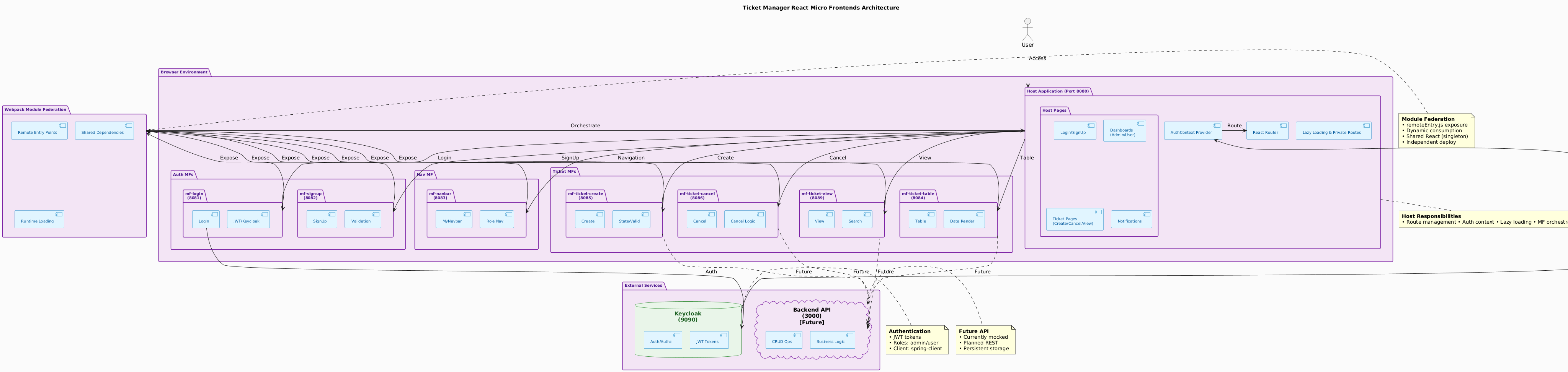
- Architecture
- Architecture Diagram
- Ports / Remotes
- Functional Flow (Current)
- Main Routes (Host)
- Key Technologies
- Common Scripts (per microfrontend)
- Local Installation & Run
- Folder Structure
- Environment Variables
- Deployment Strategy
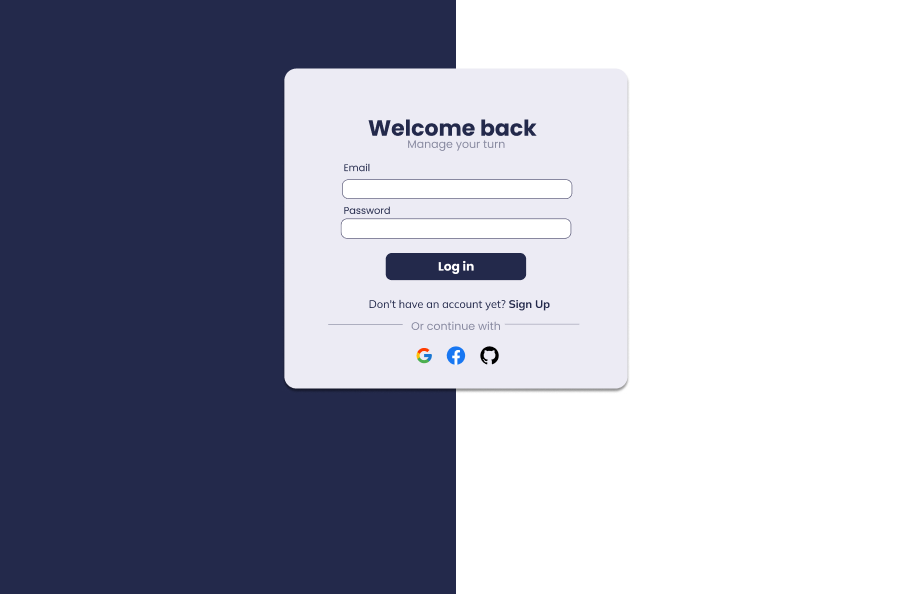
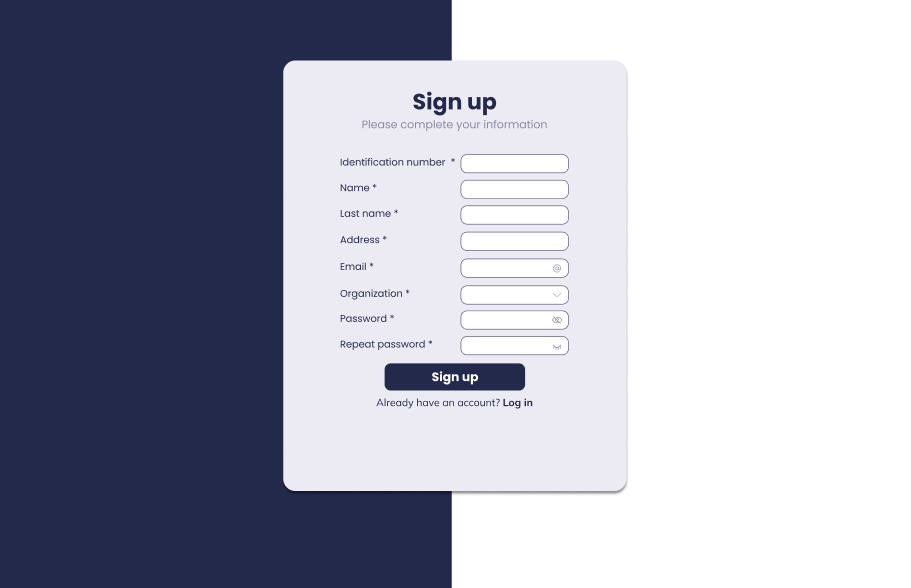
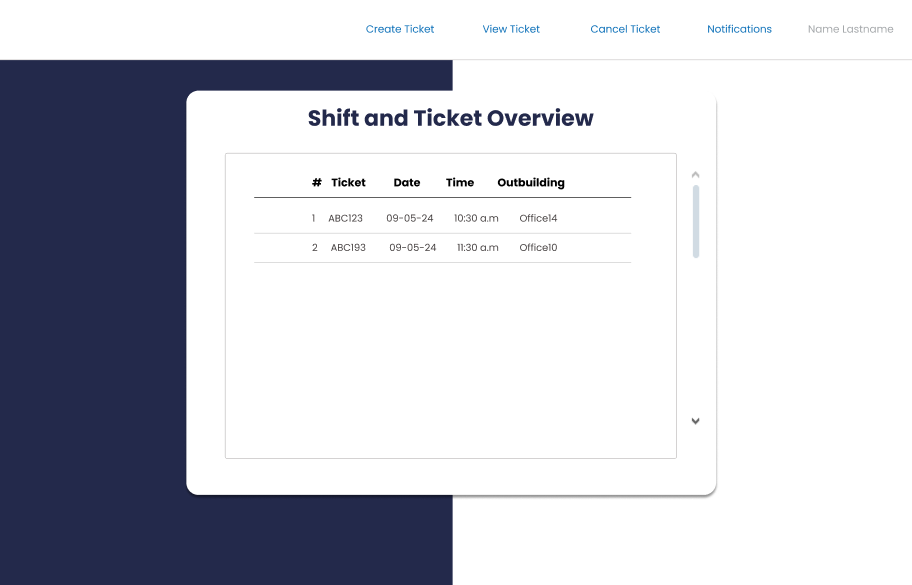
- Snapshots
- Current Limitations / Risks
- Next Improvements
- Authors
- License
- Decouple functional domains (login, signup, navigation, ticket operations) for independent scalability.
- Enable isolated deployments per vertical slice.
- Share a single React runtime (singleton) to avoid bundle duplication.
Host (host): Main router, AuthContext, lazy loaded pages, remote consumption.
Microfrontends:
mf-login: ExposesLogIncomponent.mf-signup: ExposesSignUpcomponent.mf-navbar: Navigation bar.mf-ticket-create: ExposesTicketCreate(appointment scheduling - local state only).mf-ticket-cancel: ExposesTicketCancel(cancellation simulation).mf-ticket-view: ExposesTicketView(status search simulation).mf-ticket-table: ExposesTicketTable(generic table renderer for dynamic data).
Communication: Each MFE exposes a remoteEntry.js and the host references them through remotes in its ModuleFederationPlugin configuration.
State Layer: No backend persistence included yet; forms store data in local component state for demonstration.
Styling: Bootstrap 5 + local CSS modules/files.
Auth: Simple role-based redirection (admin vs standard user) managed in AuthContext. No token management yet.
| Microfrontend | Port |
|---|---|
| host | 8080 |
| mf-login | 8081 |
| mf-signup | 8082 |
| mf-navbar | 8083 |
| mf-ticket-table | 8084 |
| mf-ticket-create | 8085 |
| mf-ticket-cancel | 8086 |
| mf-ticket-view | 8089 |
- User opens
/→ login screen (host page). - Signup available at
/signup. - Upon login,
useris stored inAuthContext; redirect logic:admin→/admin/dashboard- others →
/user/dashboard
- From dashboards navigation leads to:
- Create ticket:
/user/dashboard/createor/admin/dashboard/create - Cancel ticket:
/.../cancel - View ticket status:
/.../view - Notifications:
/user/dashboard/notifications(placeholder page)
- Create ticket:
- Ticket-related modules presently rely on in-memory state (no persistence).
/Login/signupRegistration/admin/dashboard/user/dashboard/user|admin/dashboard/create/user|admin/dashboard/cancel/user/dashboard/view/user/dashboard/notifications
Planned enhancement: enforce guards by wrapping protected routes with PrivateRoute consistently.
- React 18
- React Router DOM v6
- Webpack 5 Module Federation
- Babel (transpilation)
- Bootstrap 5 / React Bootstrap
- Dotenv (environment variable injection at build time)
npm start         # Dev server with HMR
npm run build     # Production build (outputs to dist/)
npm run build:start # Serve build (requires npx serve; ensure it's installed)From each folder (host and every mf-*):
npm install
npm start
Recommended startup order (ensures remotes ready before host):
- mf-login
- mf-signup
- mf-navbar
- mf-ticket-table
- mf-ticket-create
- mf-ticket-cancel
- mf-ticket-view
- host (last)
Then open: http://localhost:8080
(Future optimization: a root-level script using concurrently to launch all.)
host/src/pages/*Lazy loaded page components.host/src/context/AuthContext.jsSimple auth state provider.host/src/PrivateRoute.jsGuard component (not fully applied yet).mf-*/src/components/*Exposed or internal functional components.
Each webpack.config.js loads .env through dotenv-webpack.
Example per microfrontend:
API_BASE_URL=http://localhost:3000/apiAdjust publicPath and remote URLs for production builds.
- Build each microfrontend:
npm run build(generatesdist/). - Host each
dist/on a static hosting service (ensureremoteEntry.jsis publicly reachable). - Update
remotesin the hostwebpack.config.jsto point to production URLs. - Build and deploy host after remotes are live.
Here are some representative snapshots of the application:
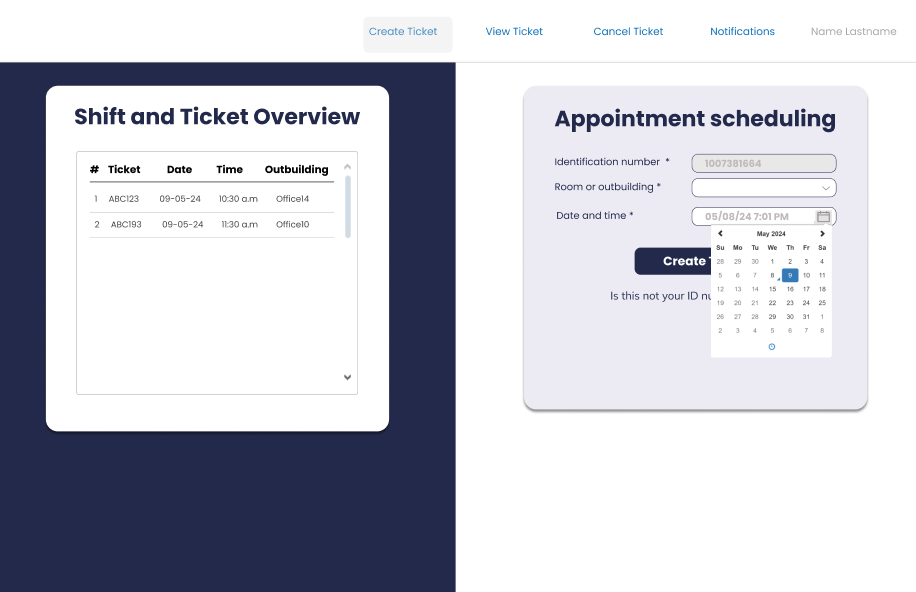
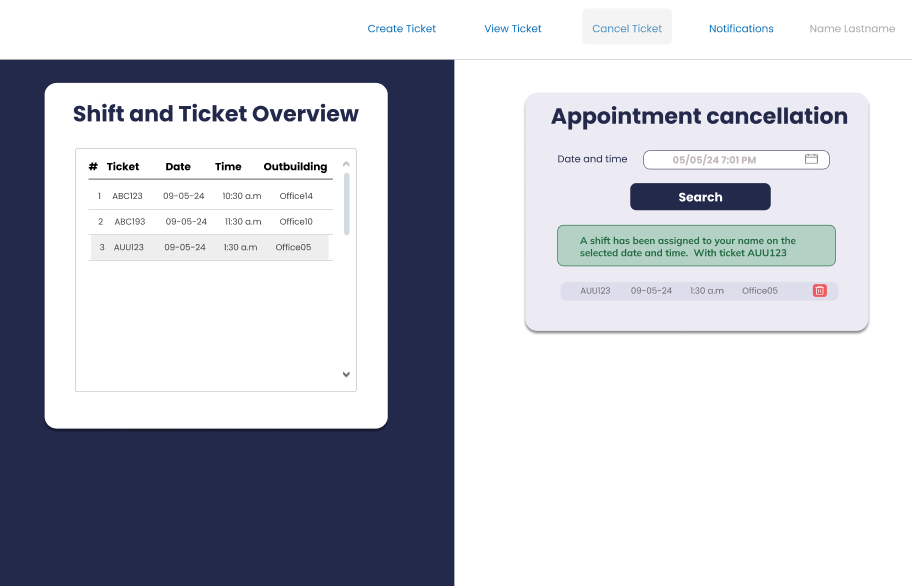
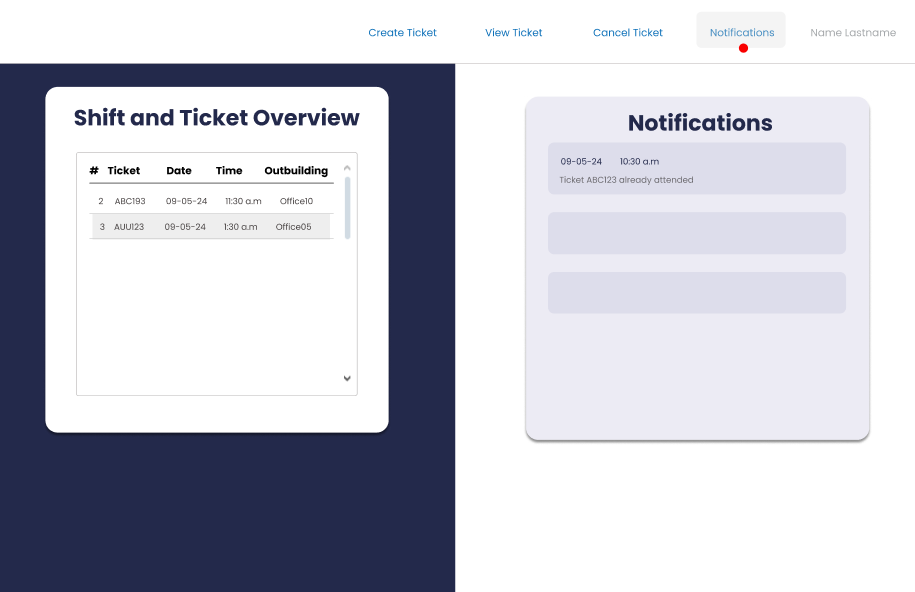
- No real persistence (mock/in-memory only).
- Role validation limited to initial redirect (no deep route enforcement yet).
- No session/token lifecycle handling.
- Hardcoded samples (e.g., identification number field locked in creation form).
- Lacking form-level + domain validation error system.
- Integrate real backend (REST or GraphQL) for tickets and users.
- Replace local component state with React Query / Zustand / Redux Toolkit as complexity grows.
- Apply
PrivateRouteto all protected dashboard routes. - Mount
mf-navbarinside a sharedLayoutwrapper. - Centralized error boundary + toast notification layer.
- Replace static form values with dynamic data sources.
- Add unit tests (Jest + React Testing Library) and E2E tests (Playwright or Cypress).
- Root orchestration script (
npm run dev:all). - Containerization (Docker) per microfrontend and compose file for orchestration.
- Performance auditing (bundle size, shared deps pruning).
- @danieltorrez29 – Systems and Computer Engineer - Database Specialist.
- @TCfajardo – Systems and Computer Engineer.
- @EstebanBarrero – Systems and Computer Engineer.
This project is licensed under the MIT License - see the LICENSE file for details