The source file is the design brief. Turn existing HTML into a beautiful, usable page — without losing its meaning.










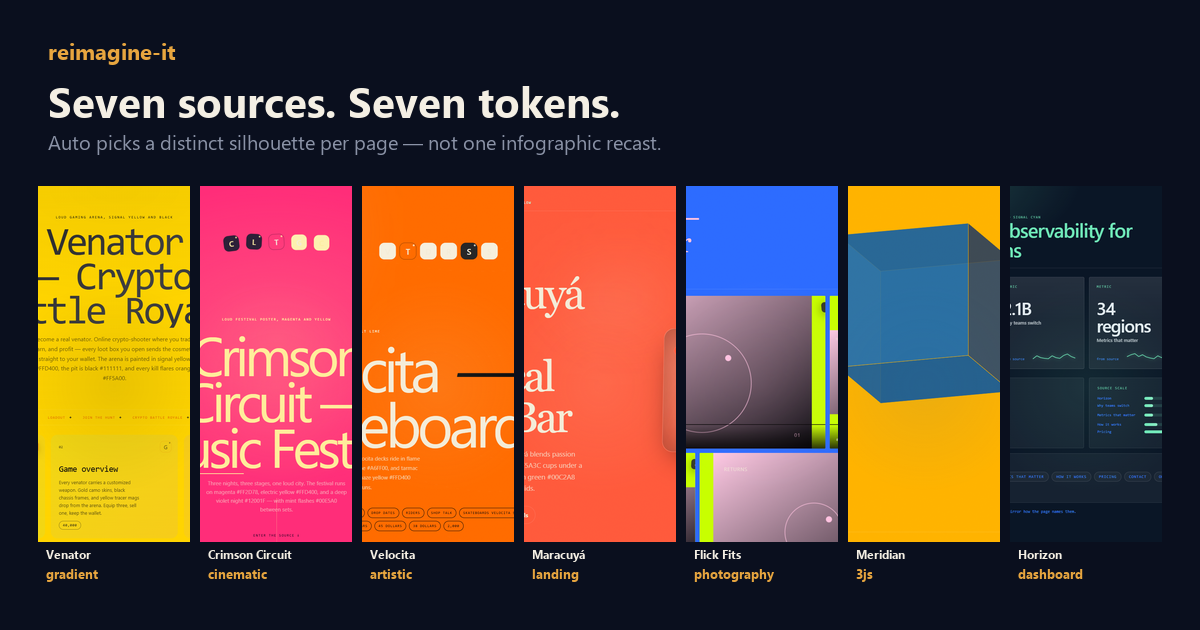
▶ 39-second walkthrough — silent screen capture of the playground: paste HTML → Auto draws three directions → pick one → download the standalone artifact.
reimagine-it redesigns an existing HTML page from the content already inside it. It extracts the real headings, facts, links, names, dates, numbers, and colors, then builds a stronger visual system around them — without replacing the page with invented filler.
npx reimagine-it --auto -i page.html -o redesign.html
npx reimagine-it variations -i page.html -n 4 -o review/
npx reimagine-it lock -i brand.html -o house.lock.json
npx reimagine-it audit redesign.html
Source in. Beautiful, usable HTML out. The source stays untouched. The result is one standalone HTML file — offline, no CDN, no Figma, no build step. Four commands share that engine: generate (or --auto), variations, lock, and audit.
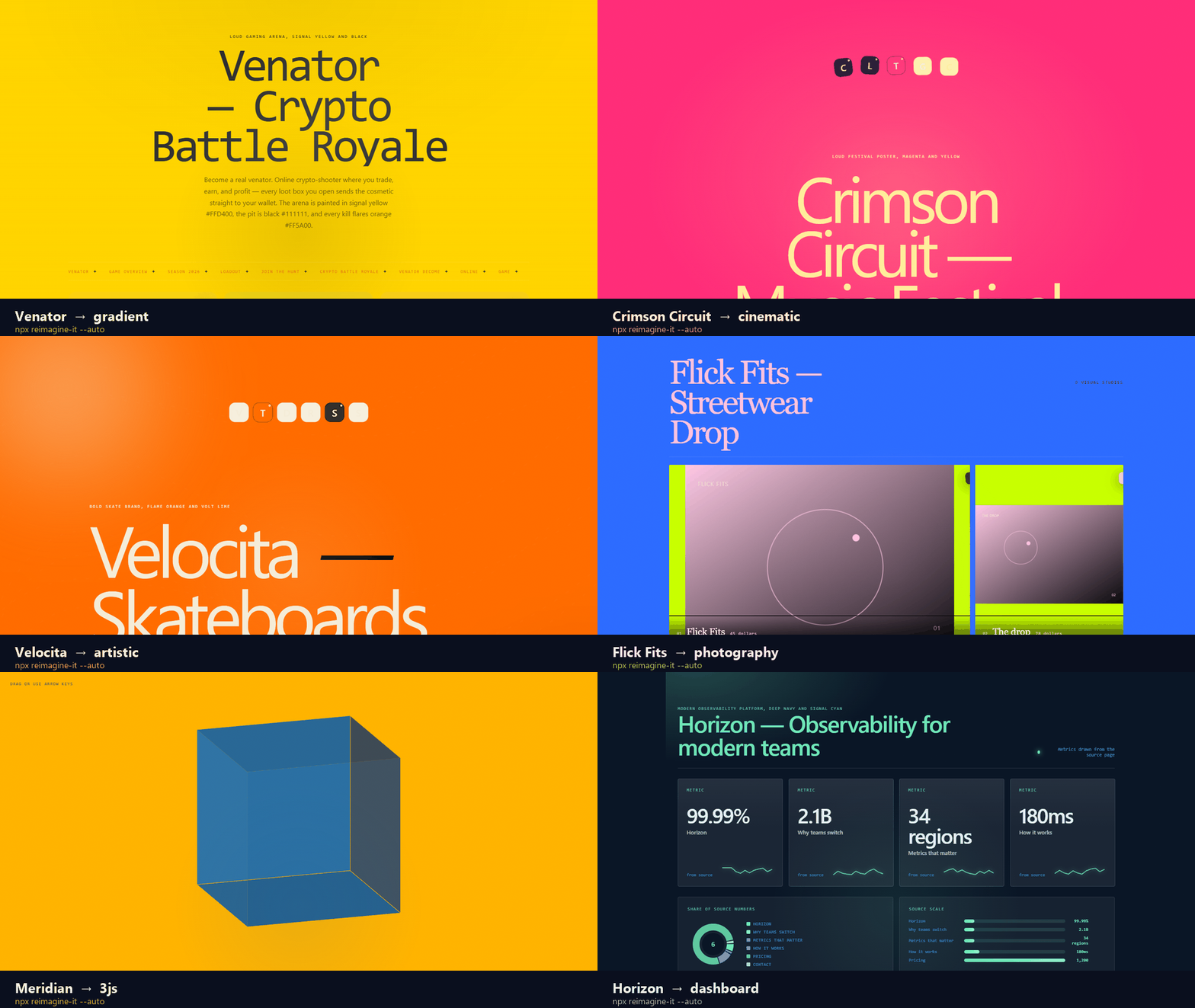
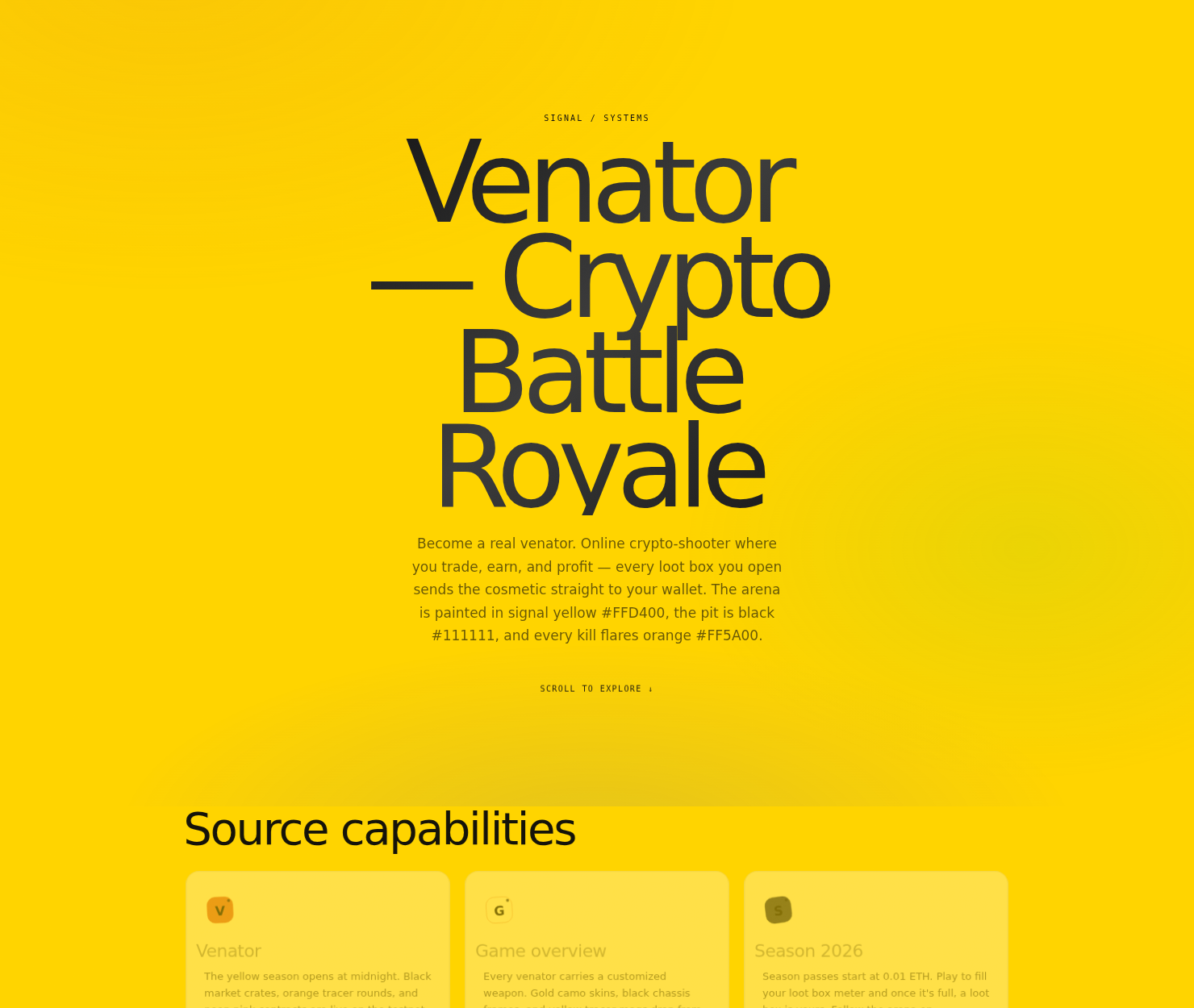
Real sources, real CLI output — nine committed journeys. The seven launch journeys own seven distinct Auto tokens, so a juice bar, a skate deck, and a streetwear drop do not share a silhouette; the two newest prove the v2.7.0 guarantees — a bakery collection becomes a photography folio (not a data poster), and a city budget becomes an infographic whose first fold is the source's own timeline.
| Source | Auto | Score | Fidelity | Alternates |
|---|---|---|---|---|
| Venator | gradient |
246 | 100% | artistic, landing |
| Crimson Circuit | cinematic |
258 | 100% | gradient, motion |
| Velocita | artistic |
240 | 100% | gradient, editorial |
| Maracuyá | landing |
246 | 100% | editorial, photography |
| Flick Fits | photography |
250 | 100% | showcase, editorial |
| Meridian Tower | 3js |
260 | 100% | editorial, cinematic |
| Horizon | dashboard |
330 | 100% | infographic, gradient |
| Hearth & Grain | photography |
226 | 100% | dashboard, gradient |
| Millbrook | infographic |
278 | 100% | simulation, dashboard |
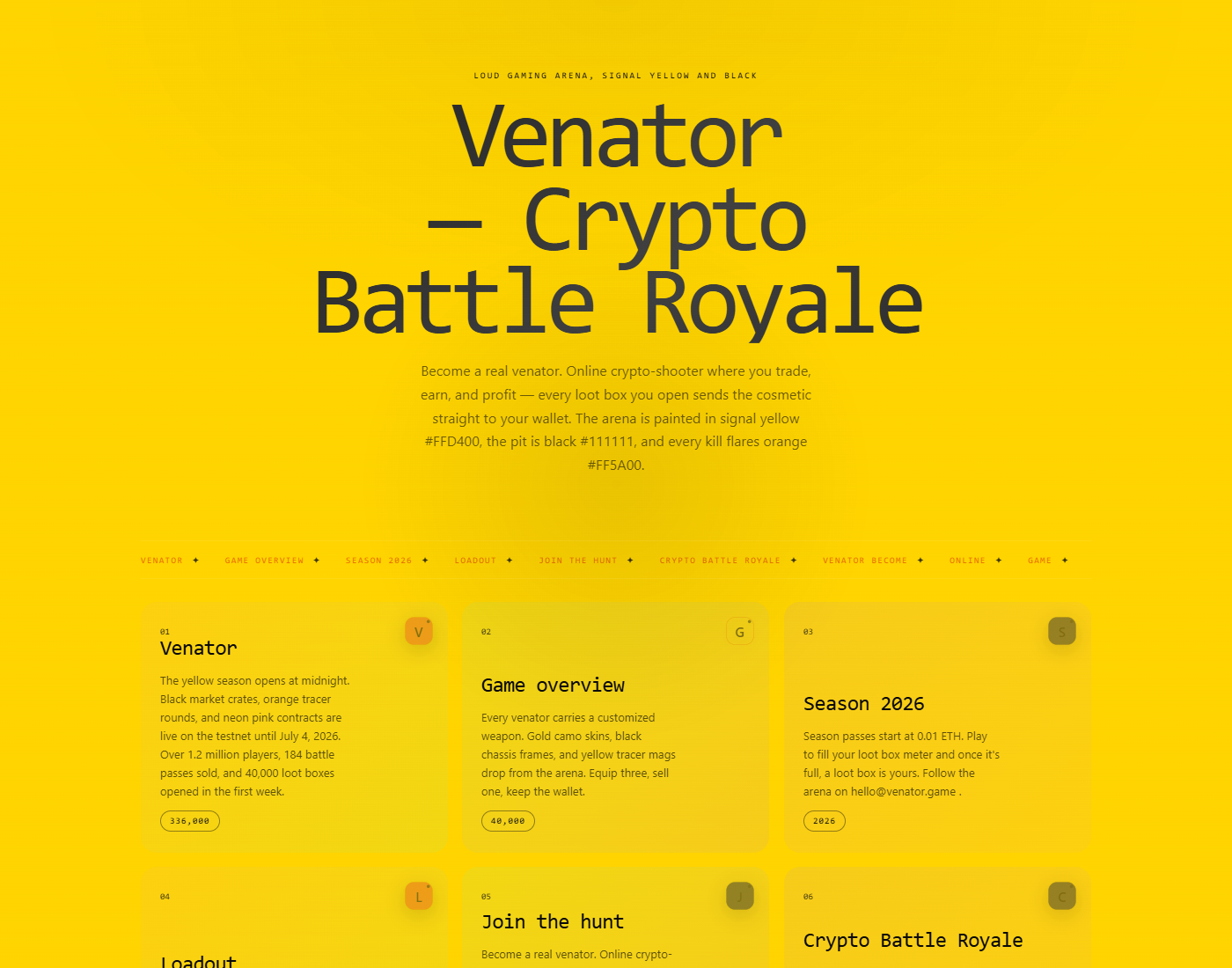

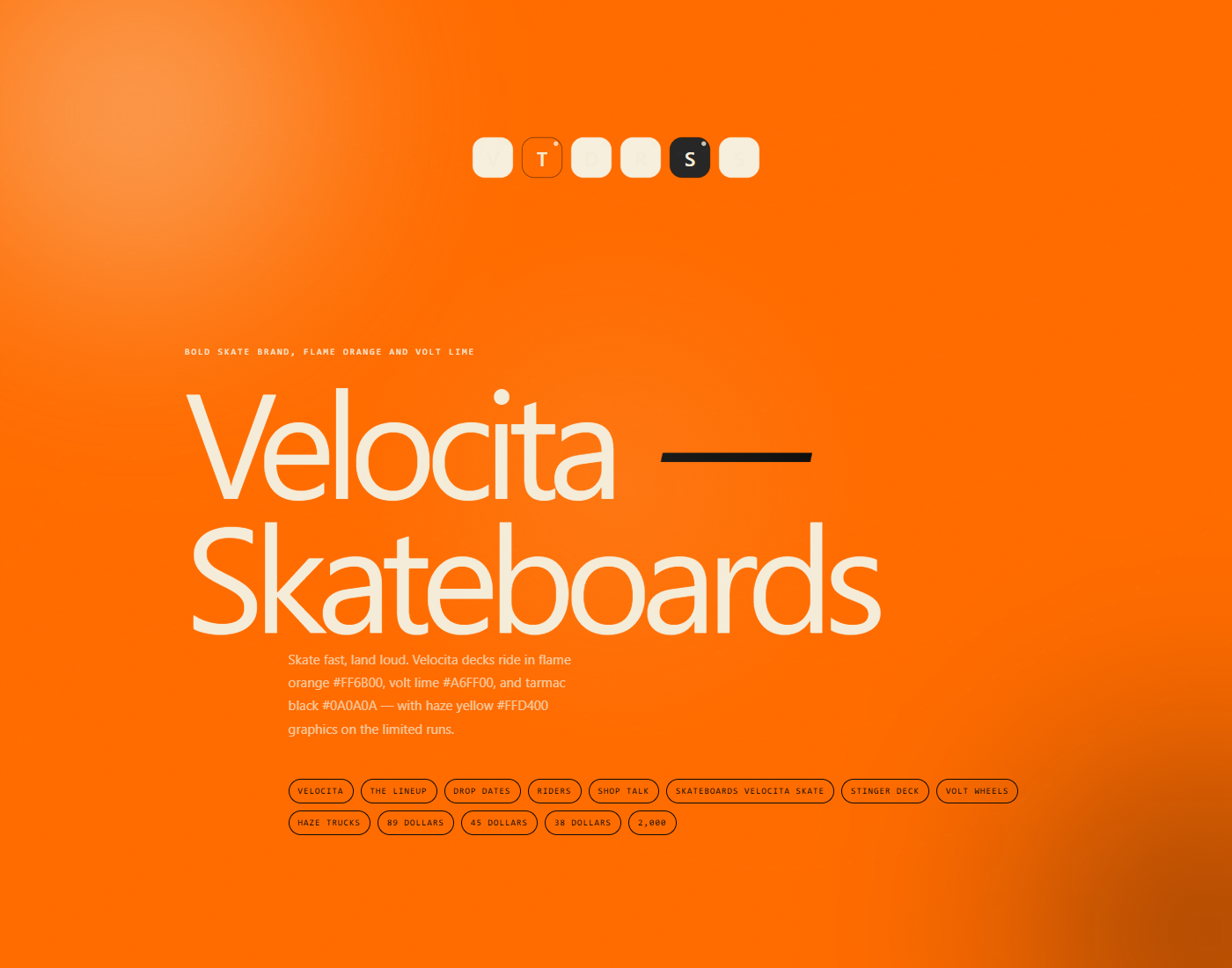
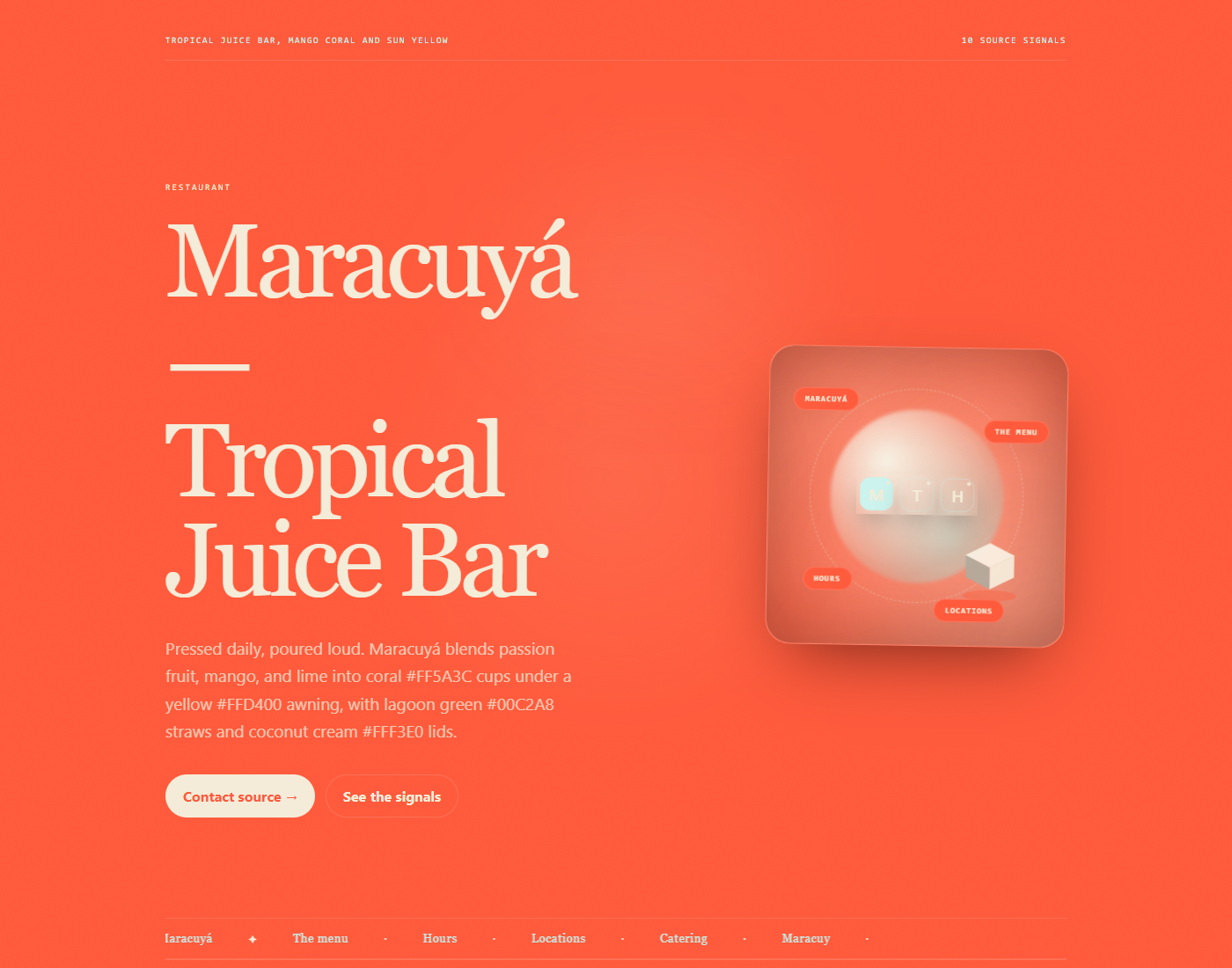
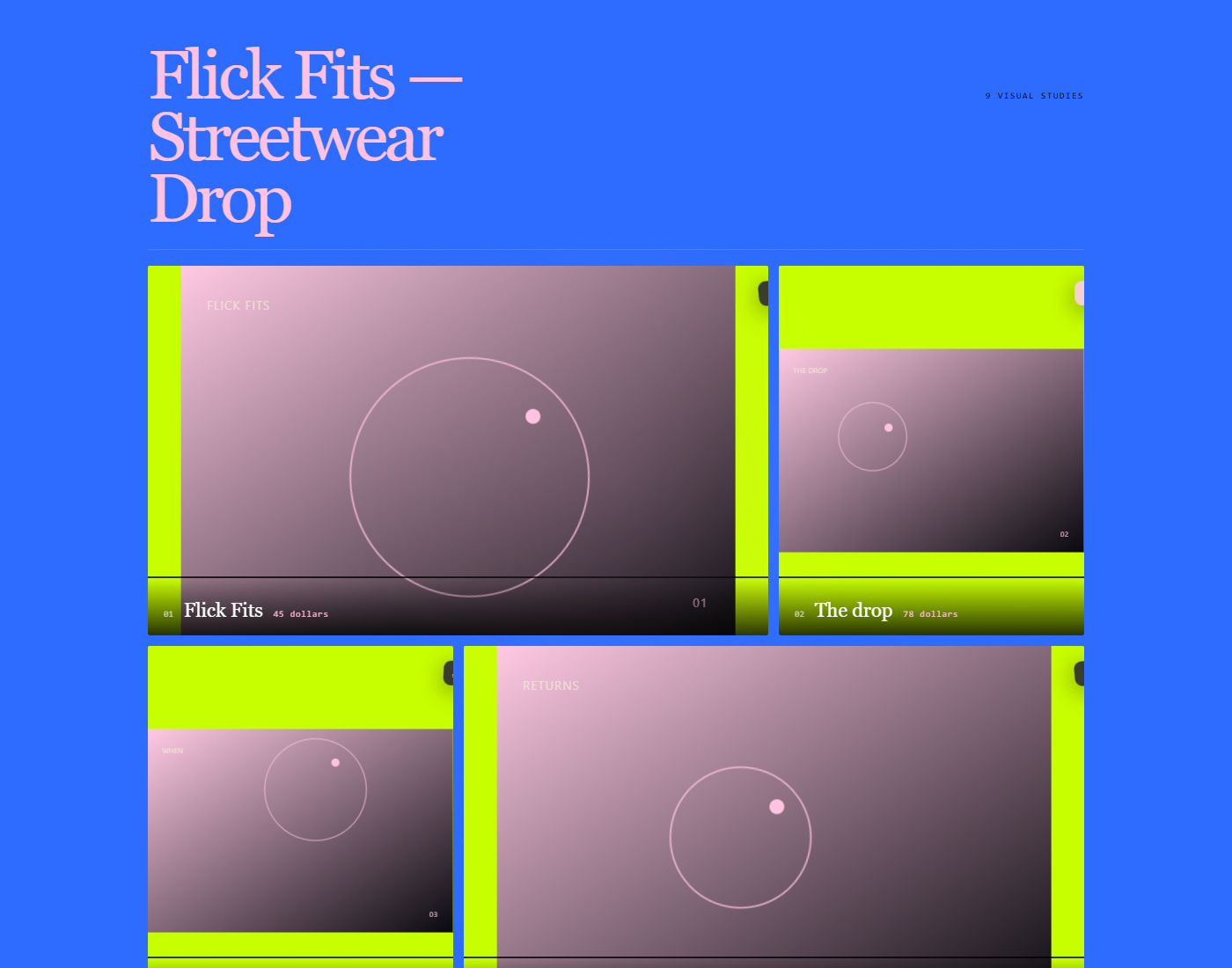
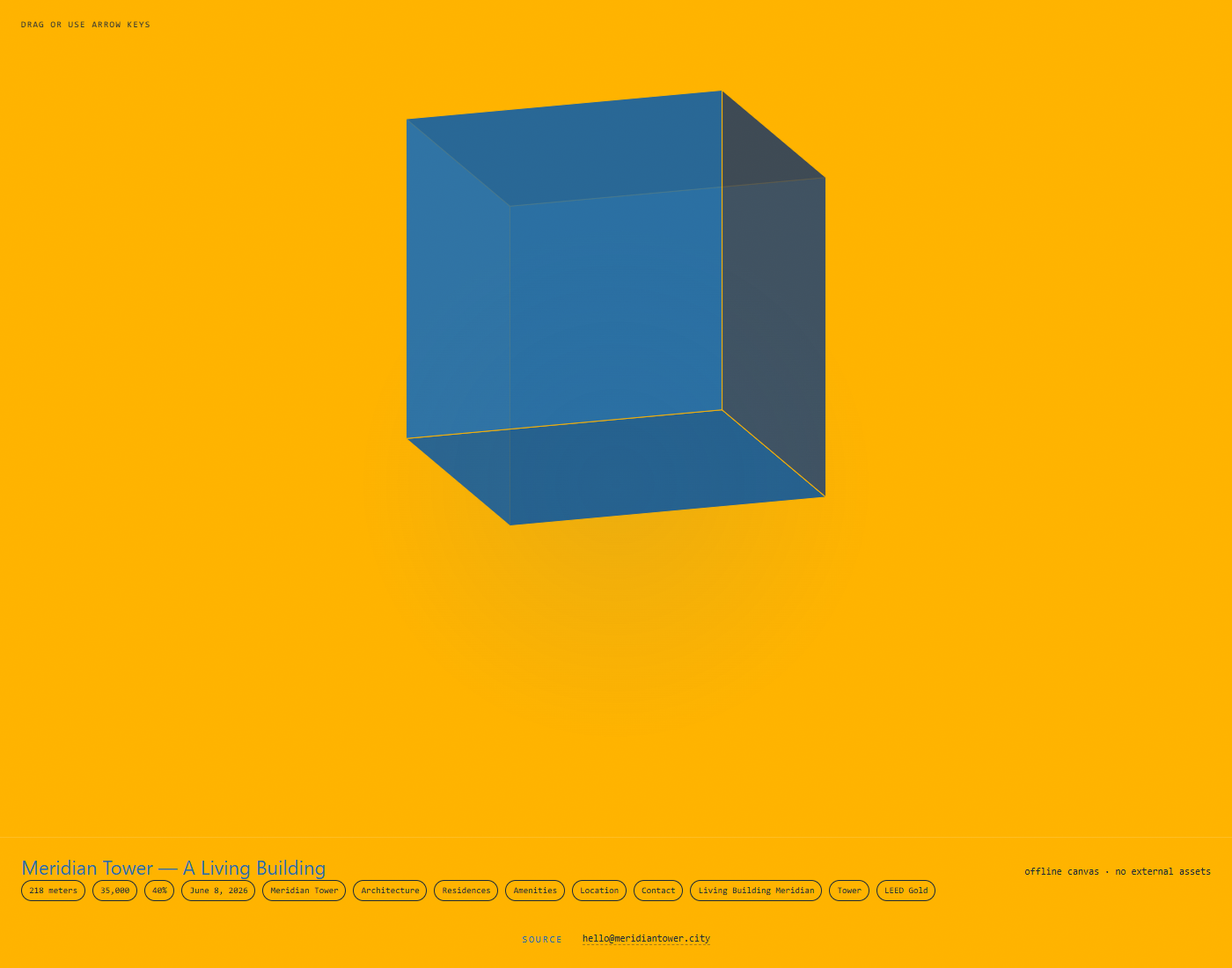
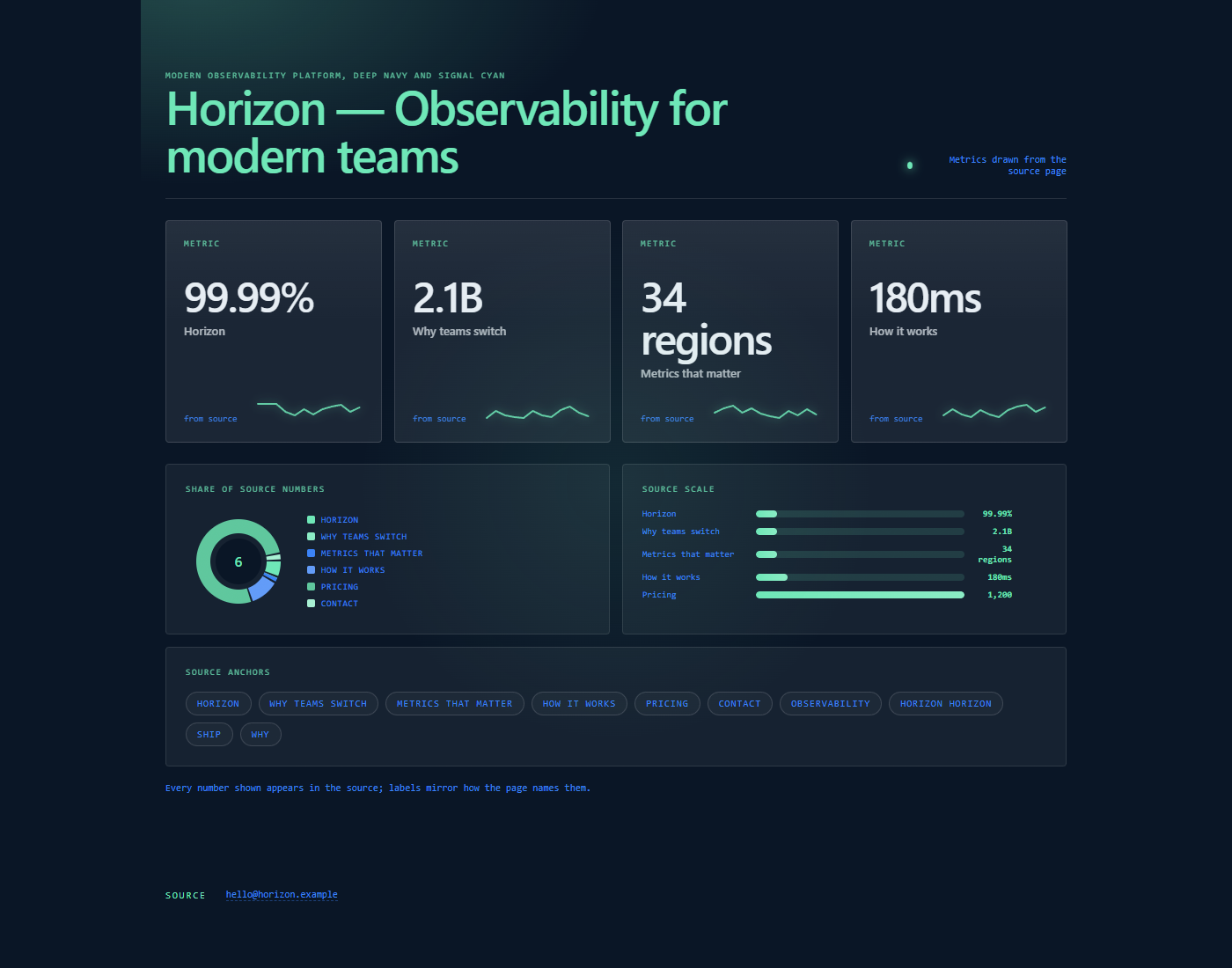
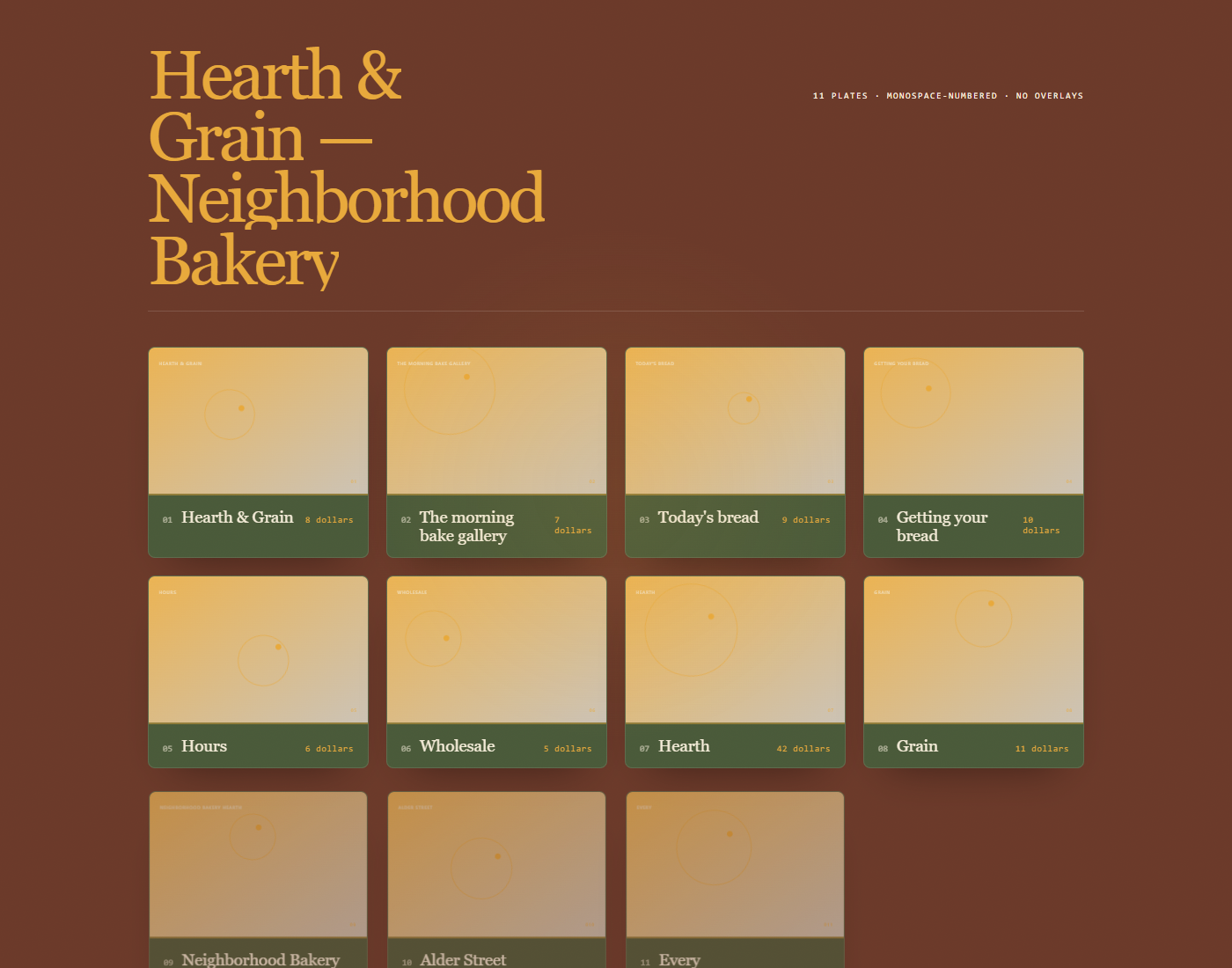
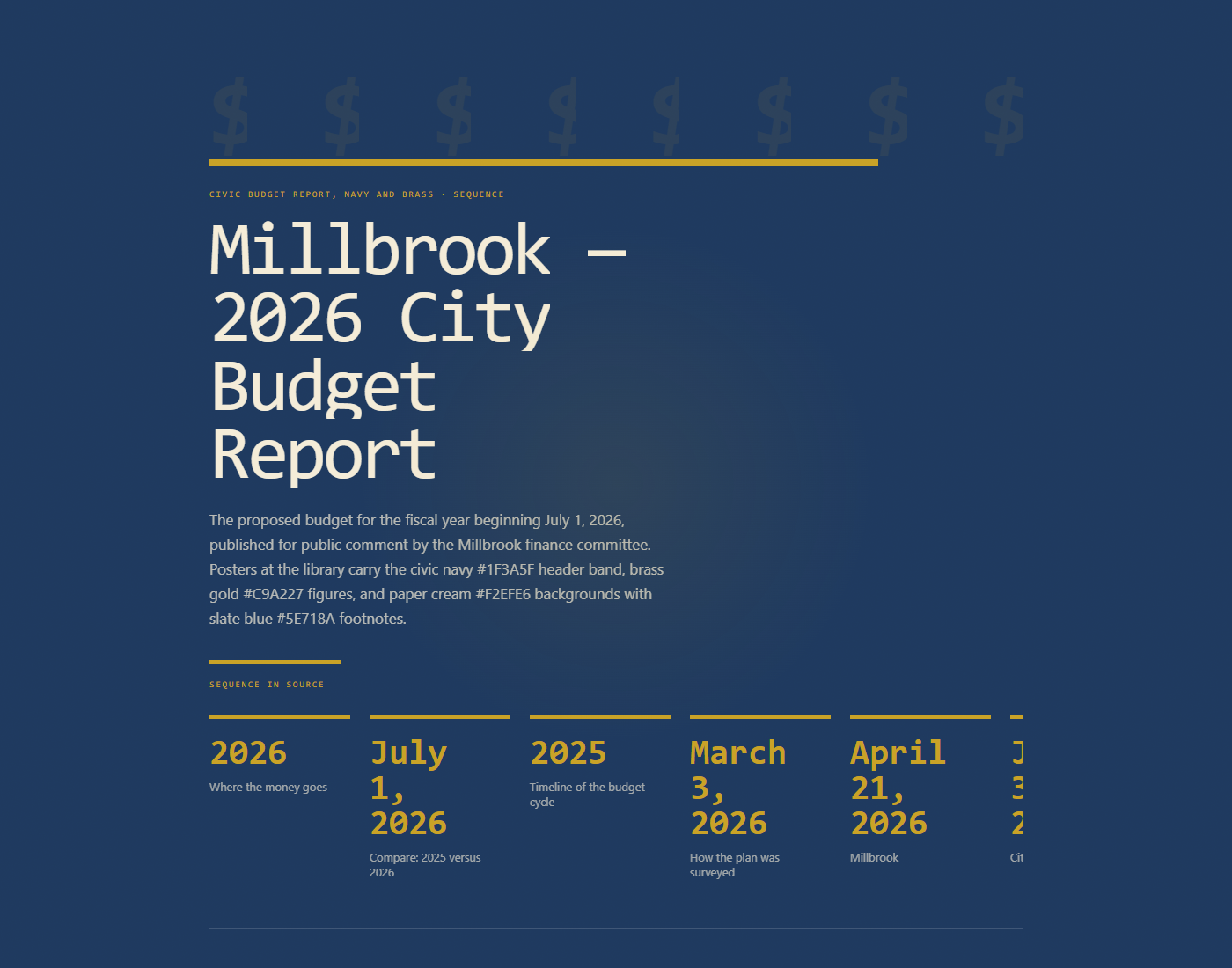
Auto desktops from the committed engine. Before/after composites and two alternatives live in each bundle.
Proven beyond the showcase — examples/public-sources/ redesigns six real public-domain pages (National Park Service, NASA, NOAA/NWS, Census Bureau, Federal Register, Smithsonian) with no declared palette for the engine to lean on: Artemis II → 3js orbit (100%), hurricane outlook → landing (100%), Yellowstone bulletin → editorial (84%), Census income brief → infographic (21/21 facts), FOIA rule → simulation, Apollo 11 → simulation. Community proofs in examples/community/ cover jobs the journeys don't — a clinic bulletin → infographic, a fashion campaign → lookbook. Every artifact regenerates byte-identically in CI.
One command, three furnished designs — point /reimagine-it at a building page and it ships an orbitable 3D object, a magazine feature, and a living SVG diagram from the same source: npx reimagine-it --auto -i meridian.html. See the suite →
Start with a real page — not a generic prompt:
<!-- before.html -->
<h1>A Letter to the Night Tide</h1>
<p>Field notes from the coast, written after the last light.</p>
<h2>Three things the water taught us</h2>
<ul>
  <li>Patience · 12 minutes of stillness</li>
  <li>Distance · 4 miles offshore</li>
  <li>Return · notes from 2026</li>
</ul>
Generate a direction:
npx reimagine-it --auto -i before.html -o redesign.htmlOpen redesign.html. It is a standalone artifact: no server, CDN, API key, Figma file, or build step is required.
For a reviewable client handoff, keep the decision report too:
npm run auto -- \
  -i before.html \
  -o review/auto.html \
  --report review/auto.json \
  --seed 42
The report records the selected direction, candidate scores, seed, rationale, source anchors, and source-fidelity checks. The input file is never overwritten.
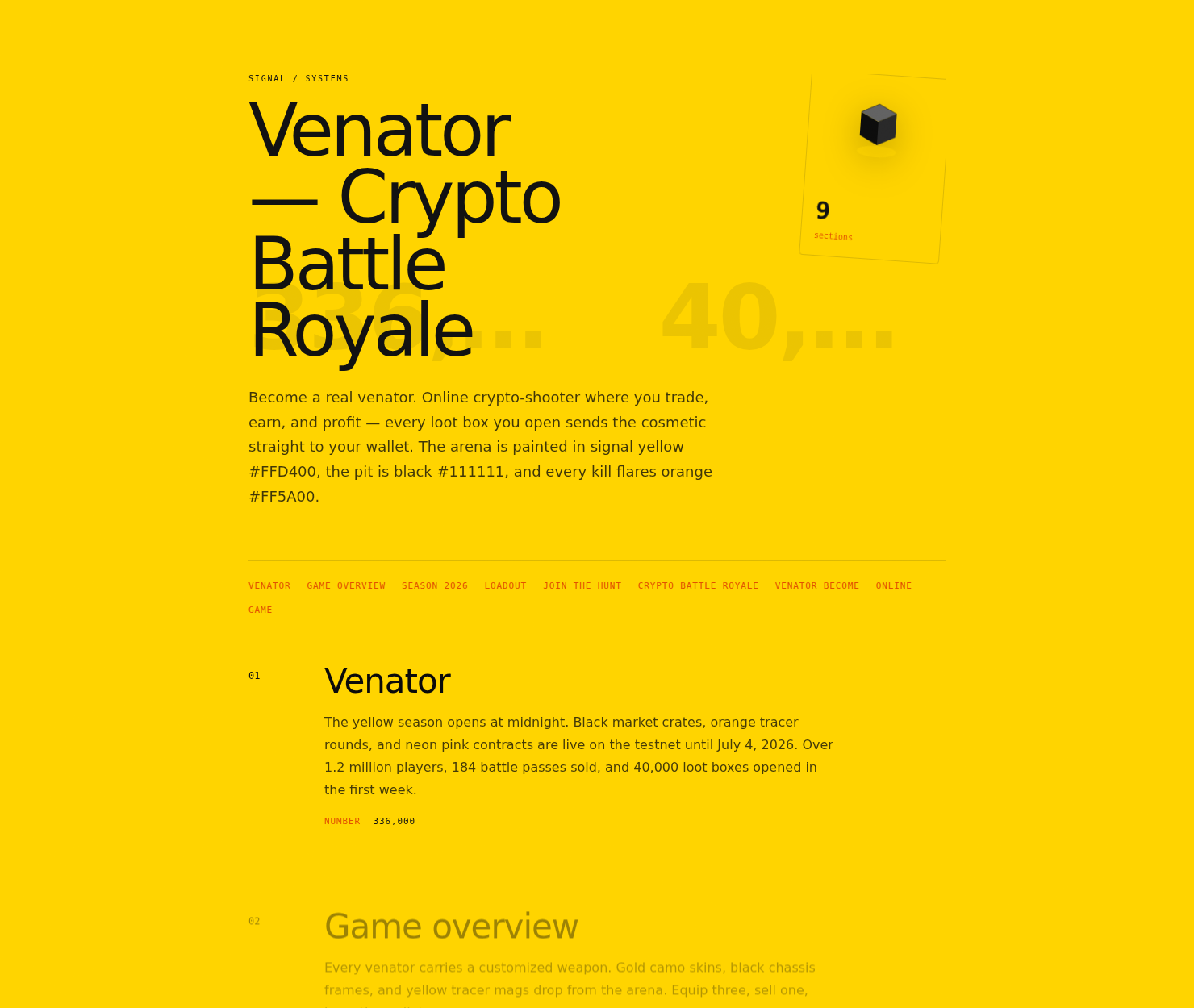
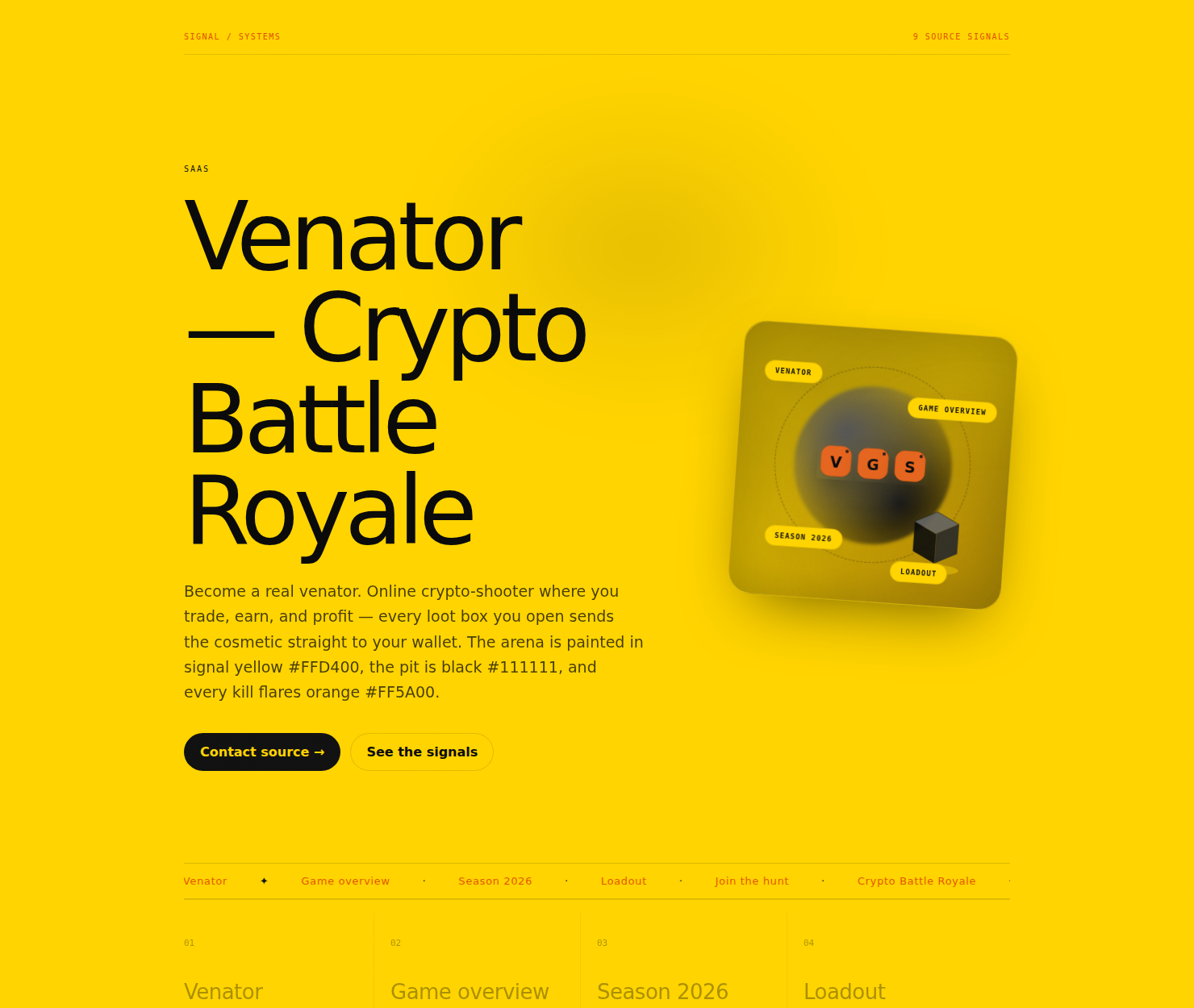
Every token is a real generator in the engine — each one reads the same extracted content and builds a structurally different composition. Layouts are generated, not pasted from a design kit; source facts are not invented. Every builder also ships with a content-derived art layer: anchor initials become monogram tiles, source numbers become donut and bar charts, and the palette shades isometric 3D prisms — all inline SVG, all offline.
| Builder | Real output (same source) | Best for | Character |
|---|---|---|---|
webpage |
 |
Articles and source documents | Measured reading hierarchy |
landing |
 |
Products and services | Hero and action rhythm |
dashboard |
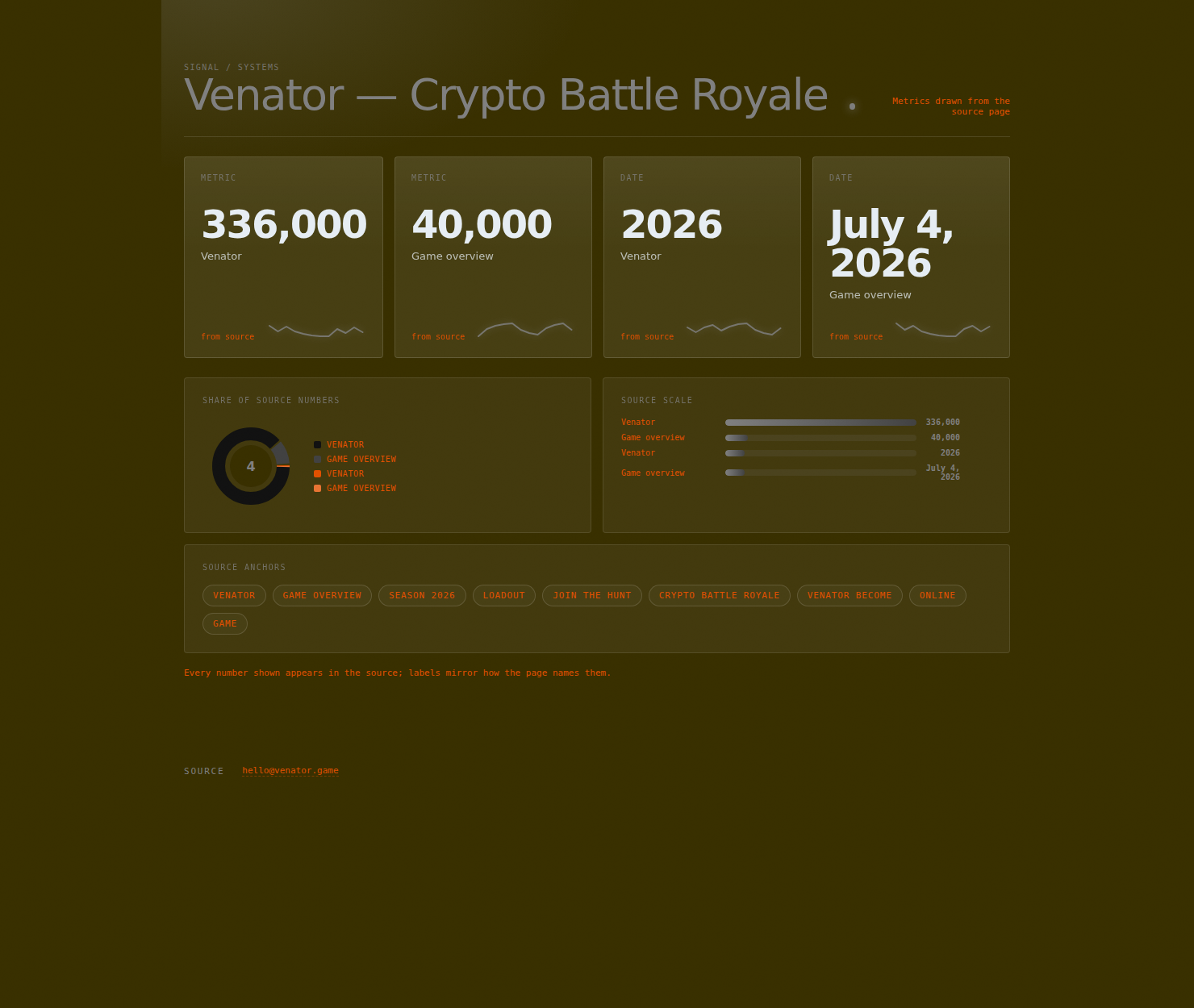 |
Metrics and operations | Console, KPIs, and status |
infographic |
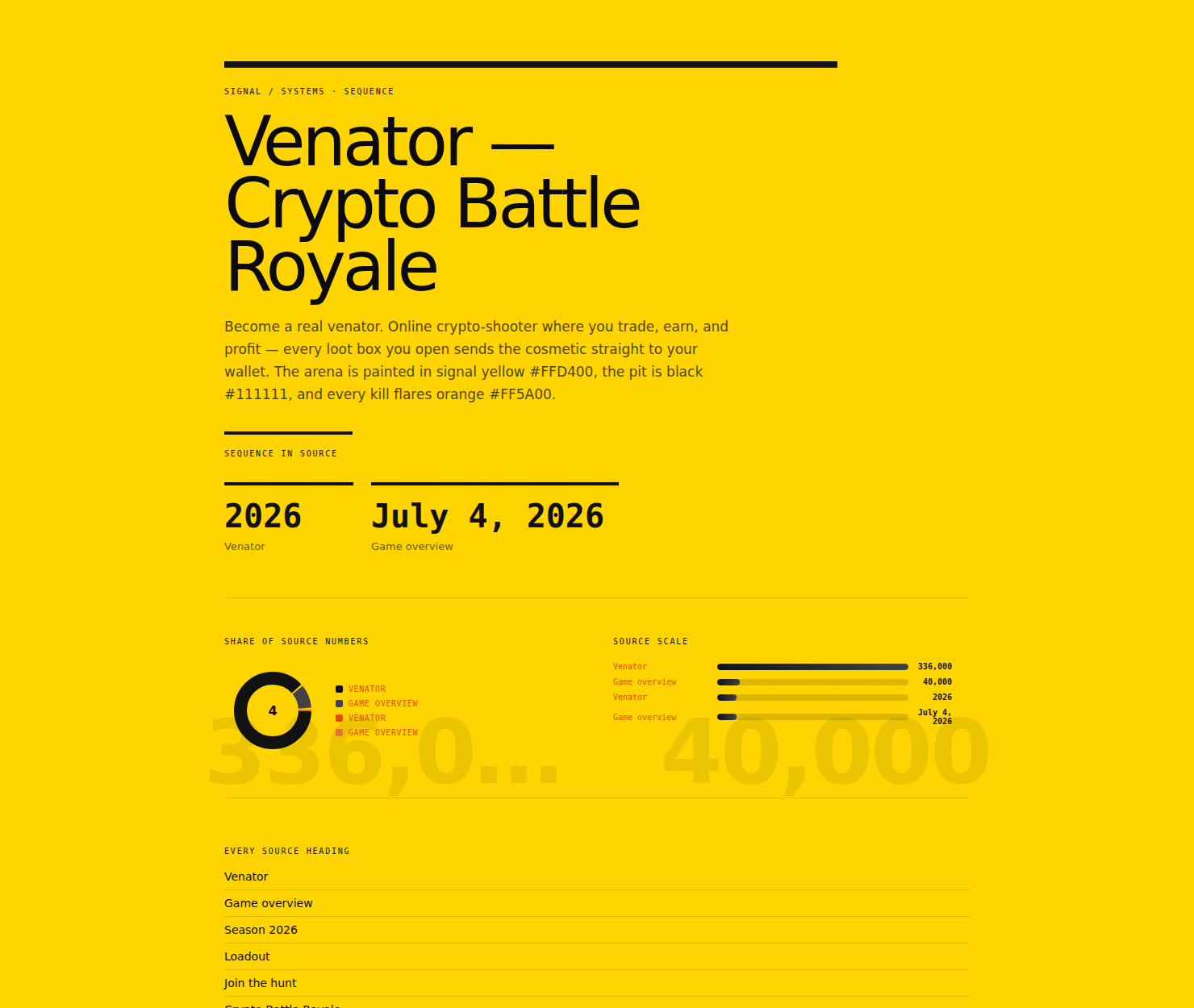 |
Facts and comparisons | Shared scales and timelines |
cinematic |
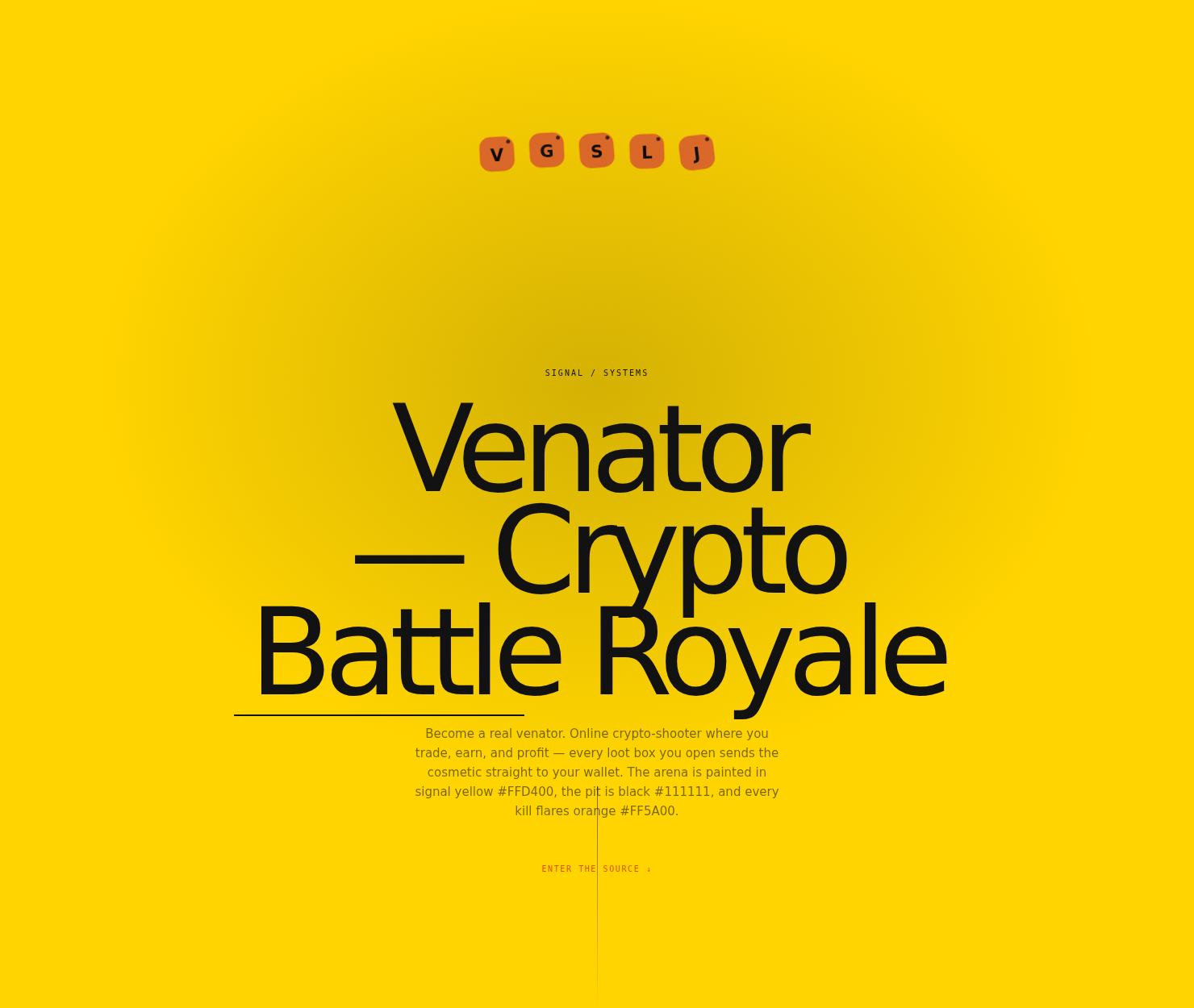 |
Narrative moments | Depth and paced chapters |
artistic |
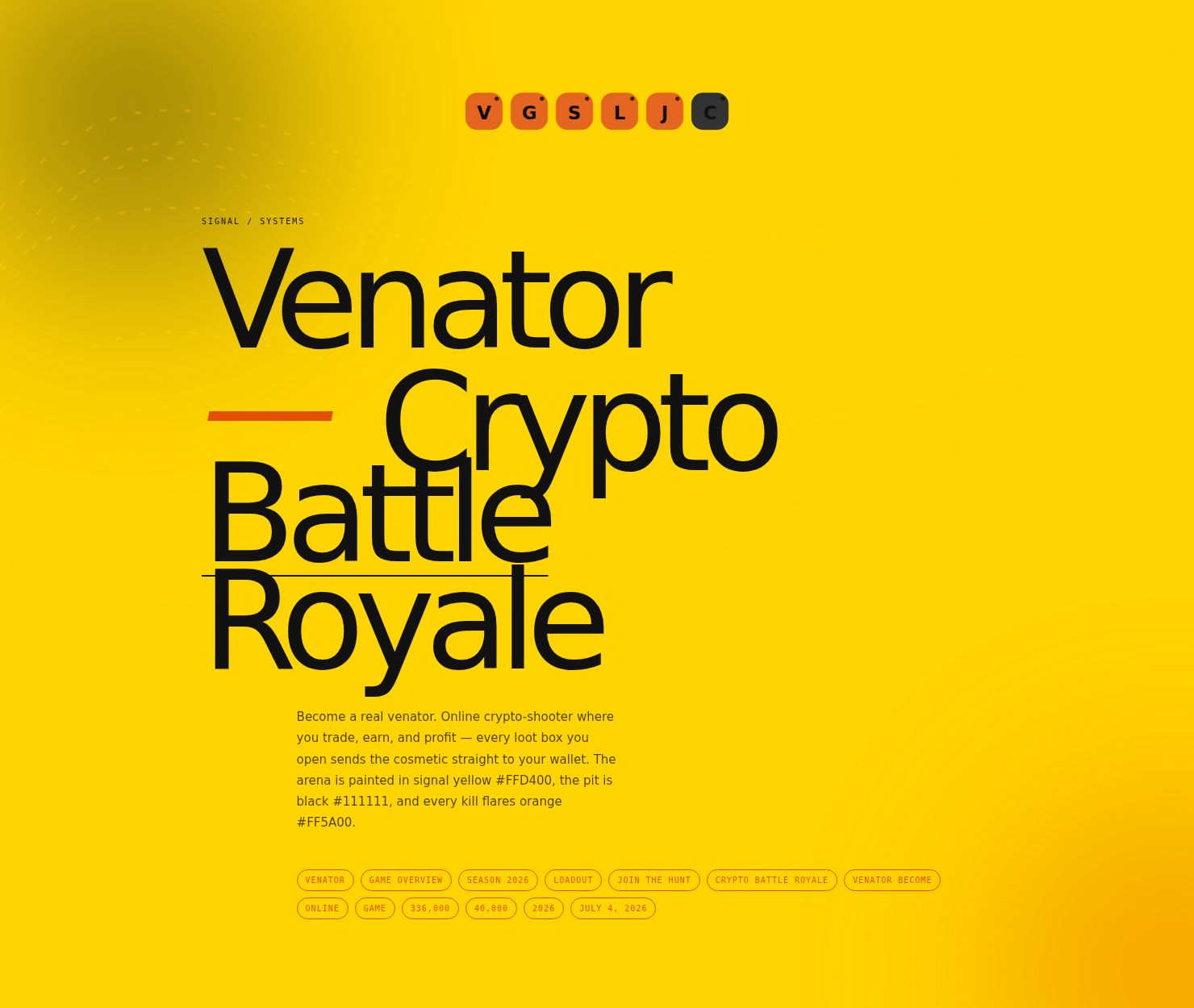 |
Posters and expressive pages | Asymmetric type and layered fields |
photography |
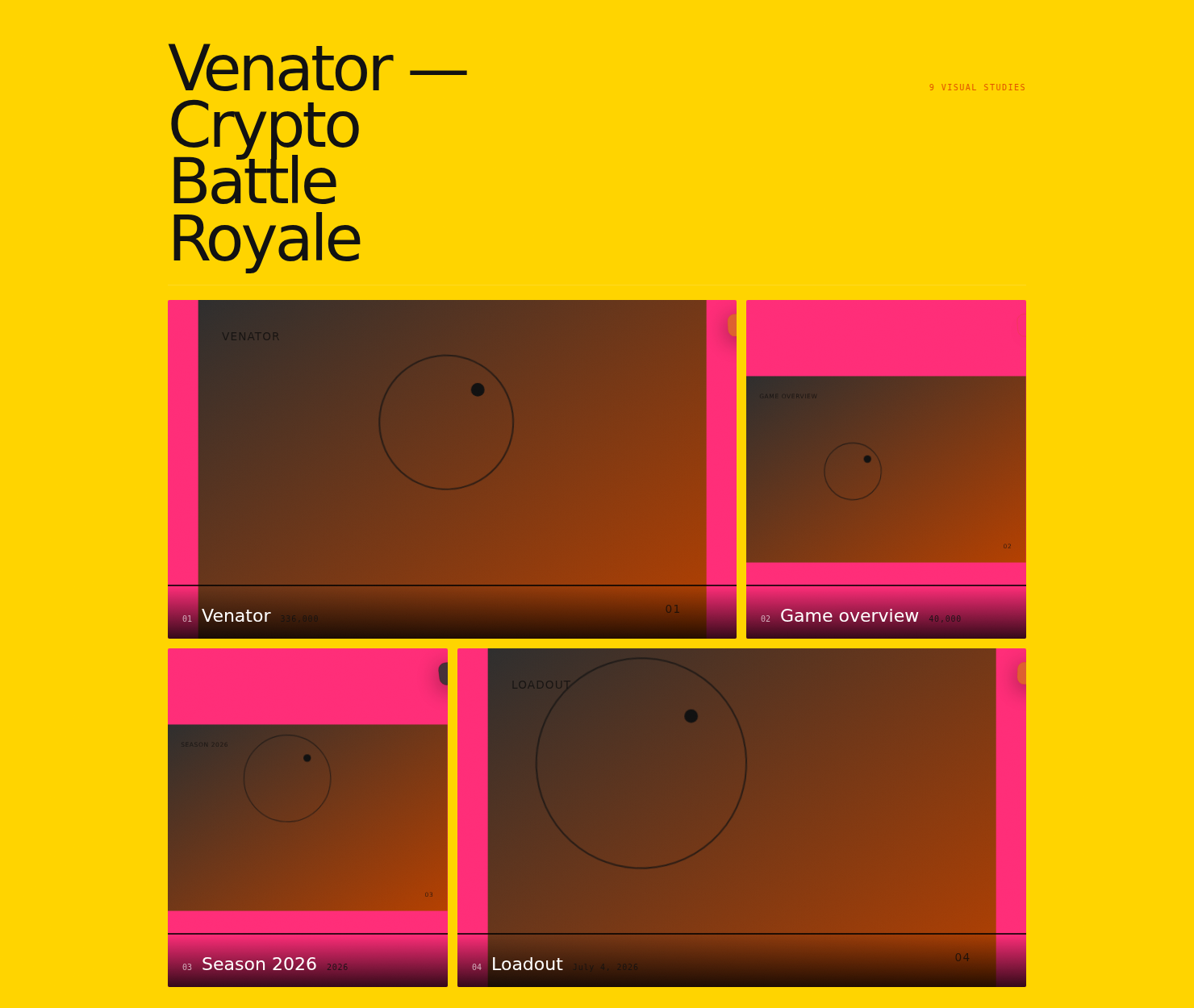 |
Portfolios and collections | Folio plates and captions |
svg |
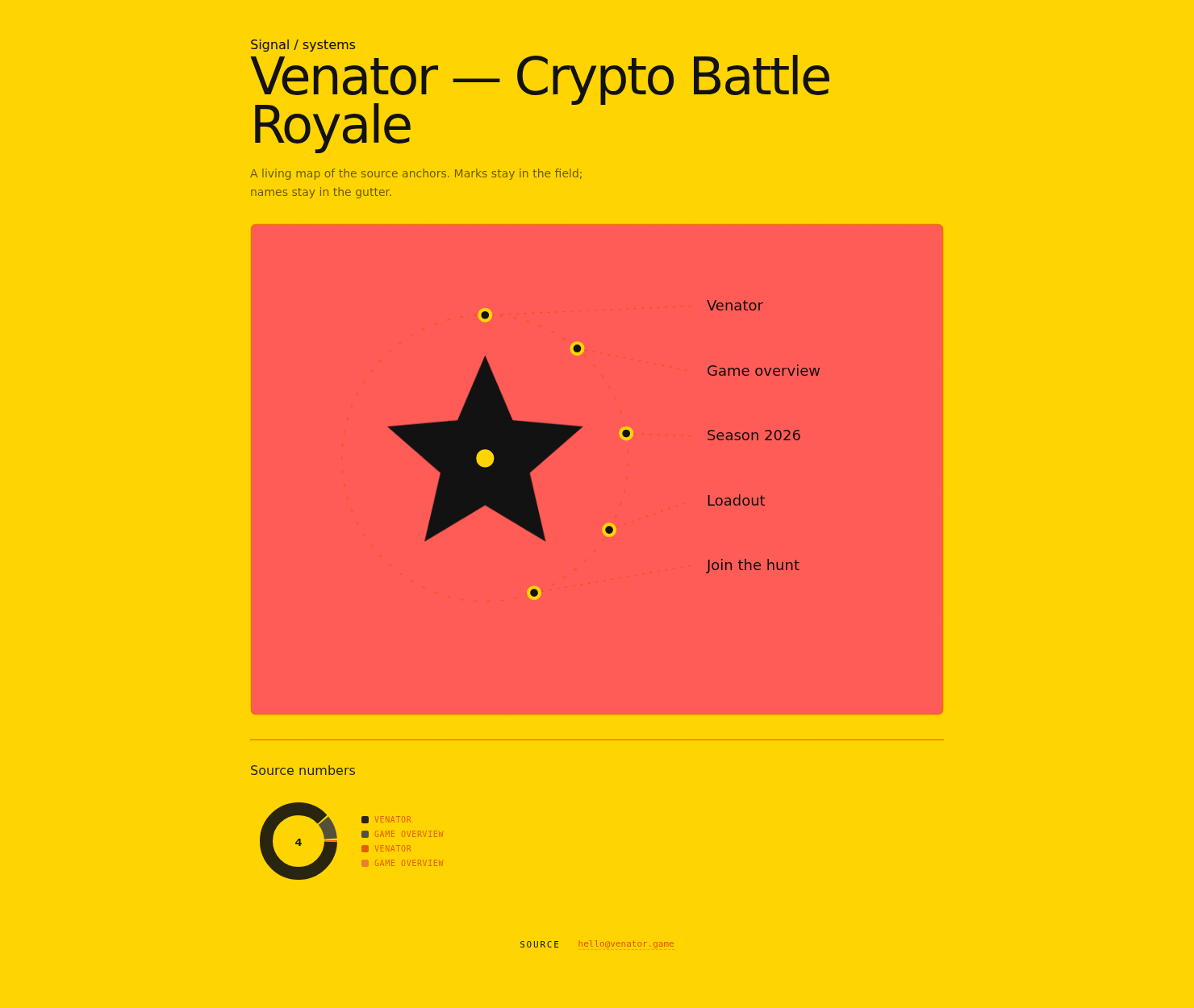 |
Marks and diagrams | Inline geometric illustration |
3js |
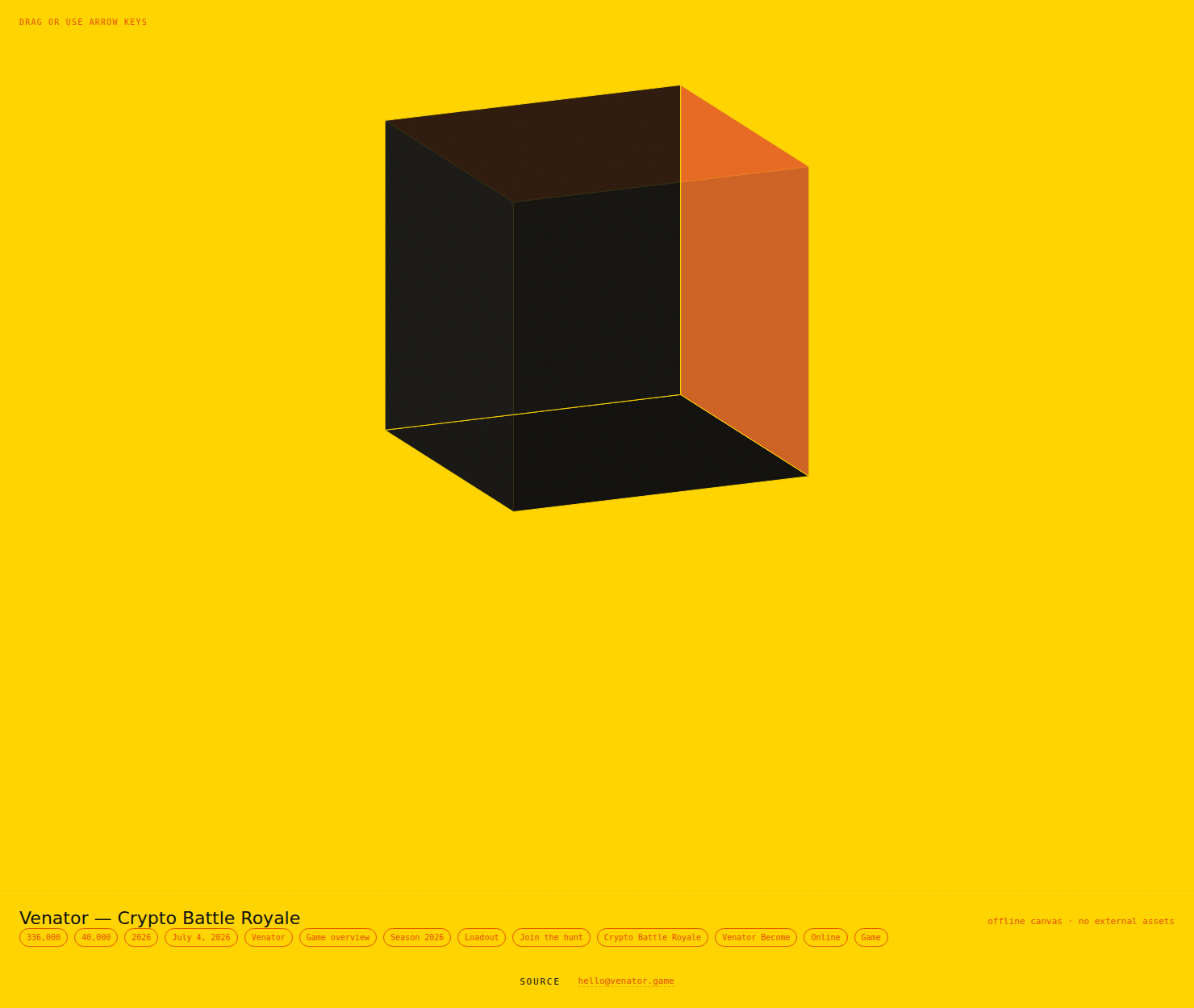 |
Spatial stories | Offline orbitable canvas |
simulation |
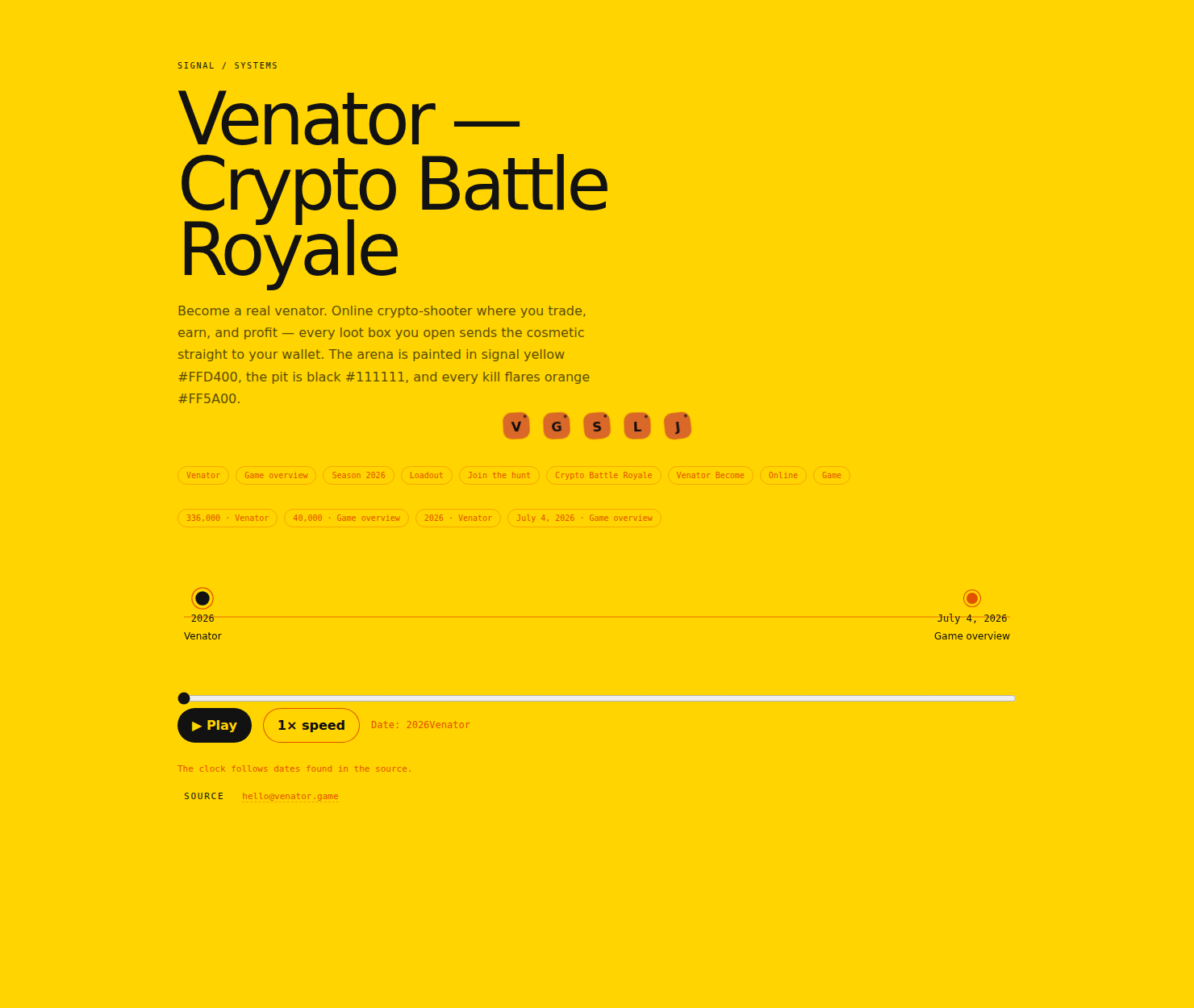 |
Time and process | Playable timeline and scrubber |
glass |
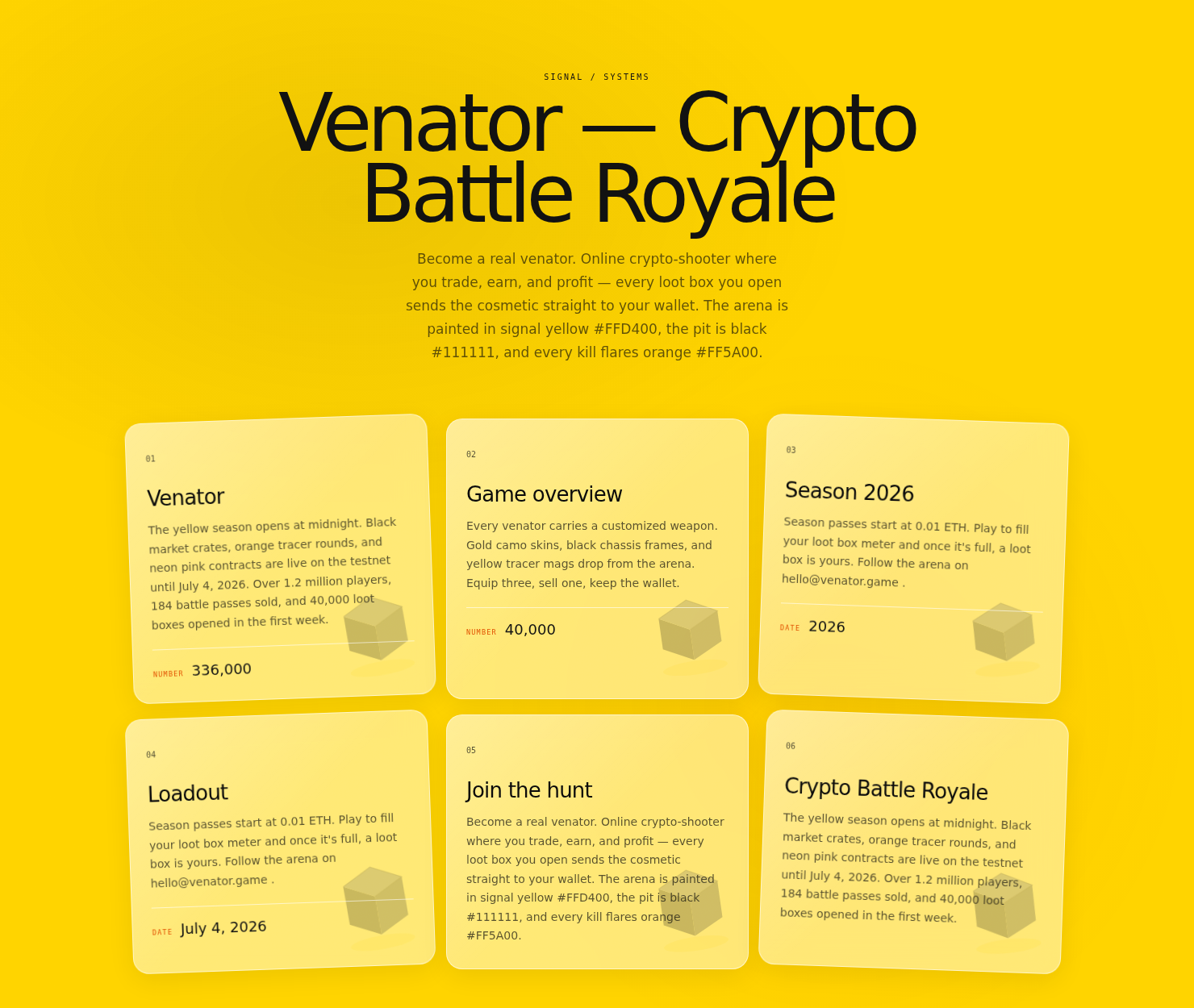 |
Modern panels and cards | Frosted backdrop-filter depth |
editorial |
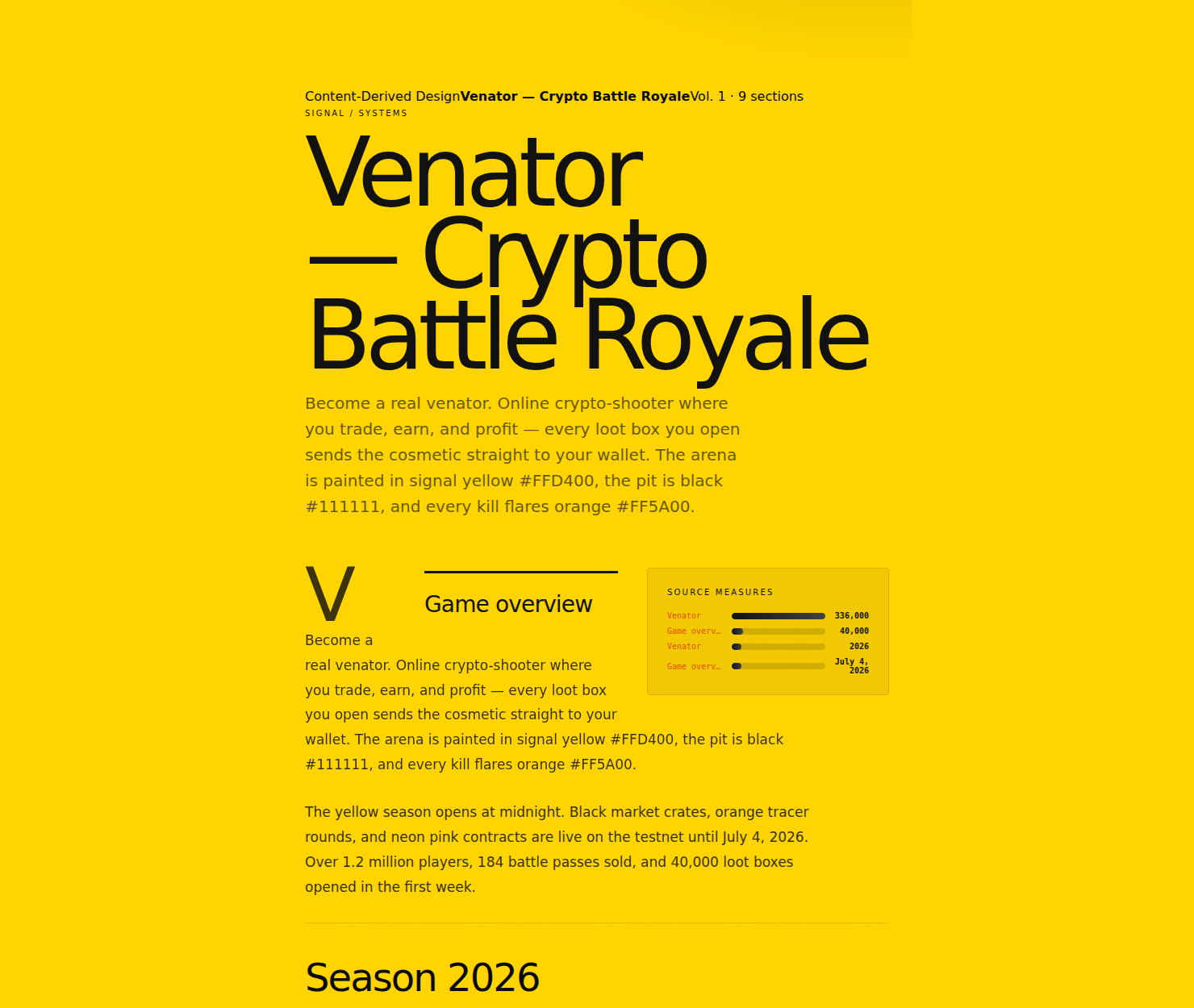 |
Long-form text and essays | Magazine layout with drop caps |
motion |
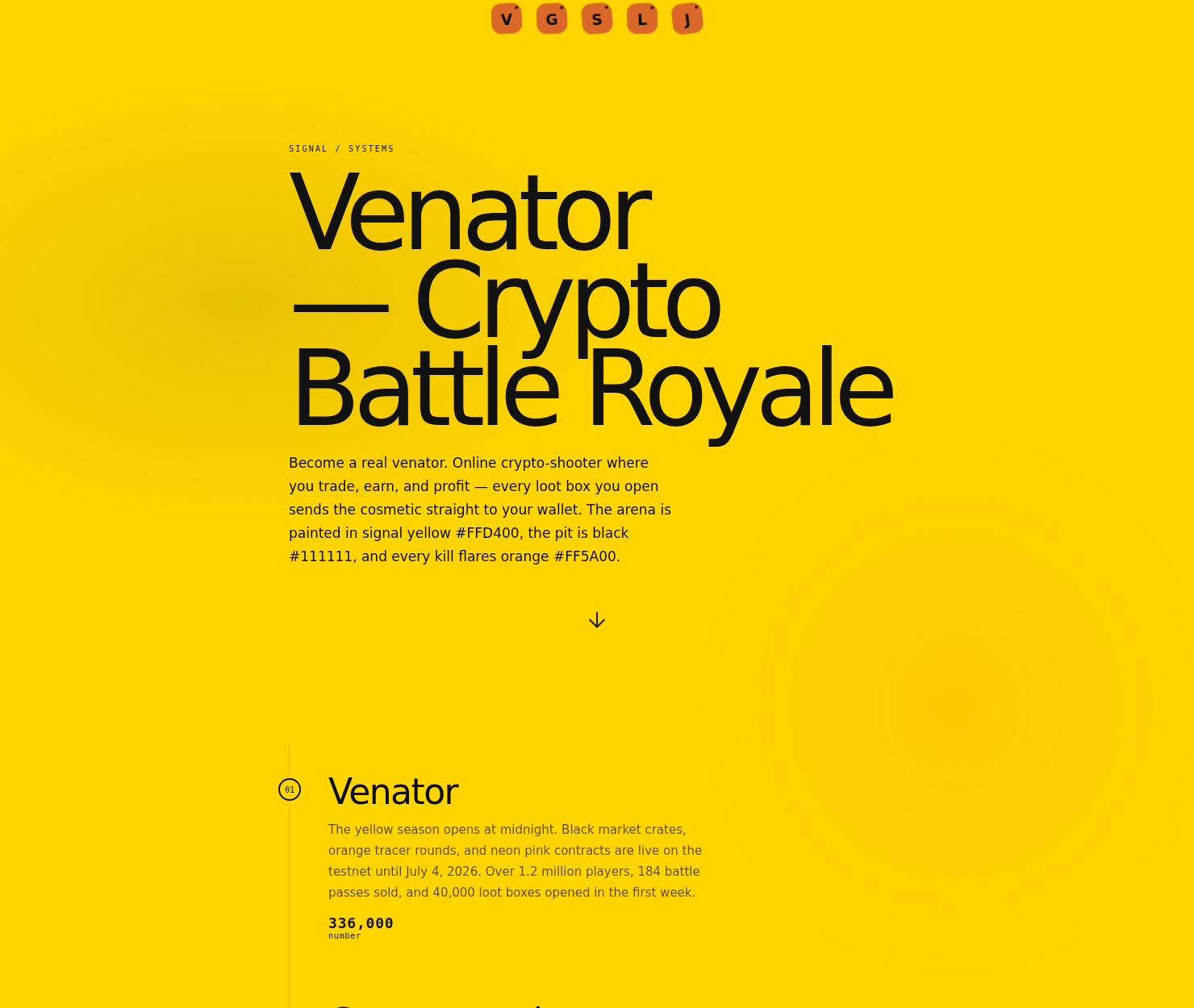 |
Scroll-driven stories | Animated reveals and parallax |
gradient |
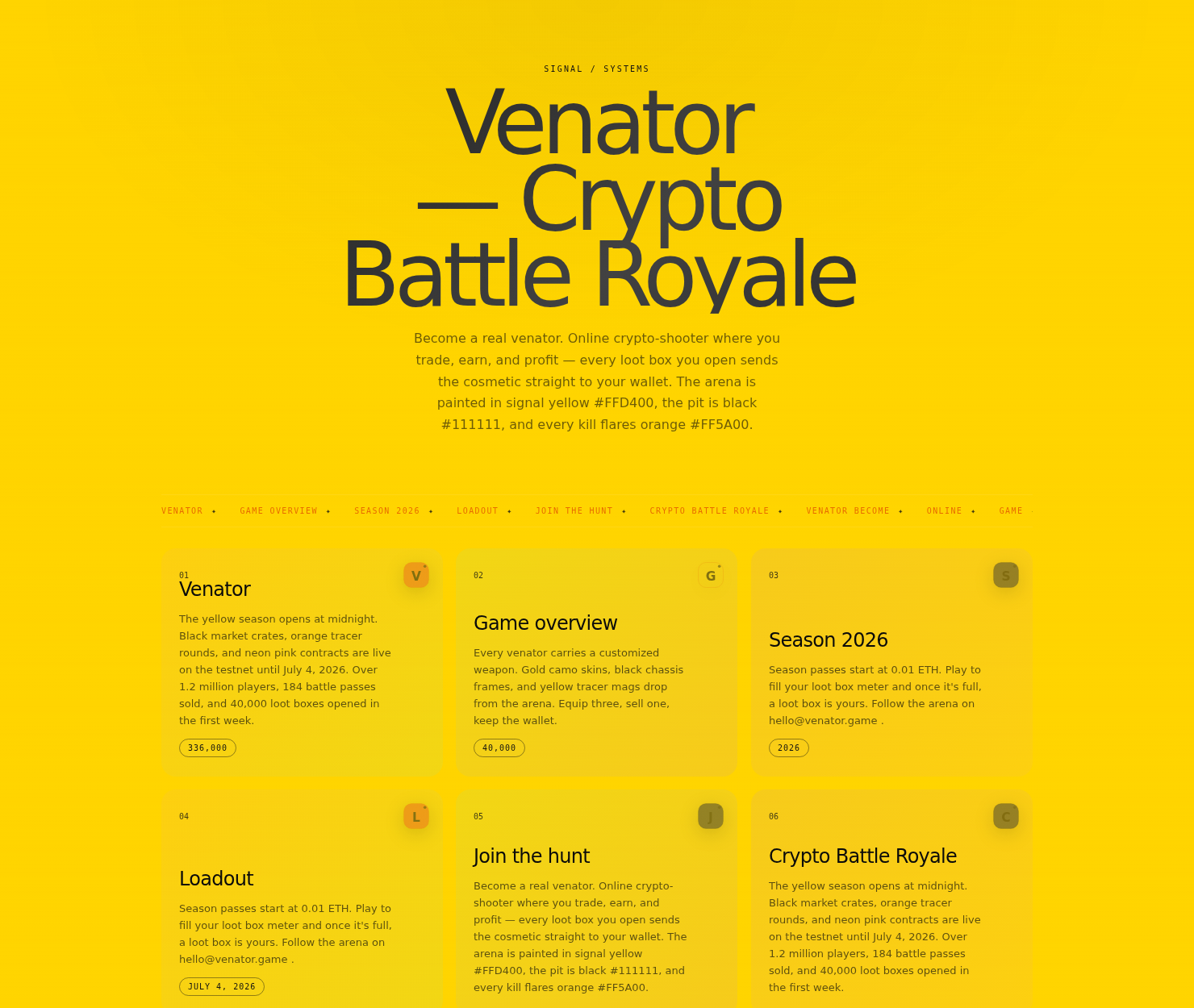 |
Bold brand presentations | Gradient mesh cards and text |
showcase |
 |
Capability demonstrations | Motion-forward capability cards, timeline, and stats |
lookbook |
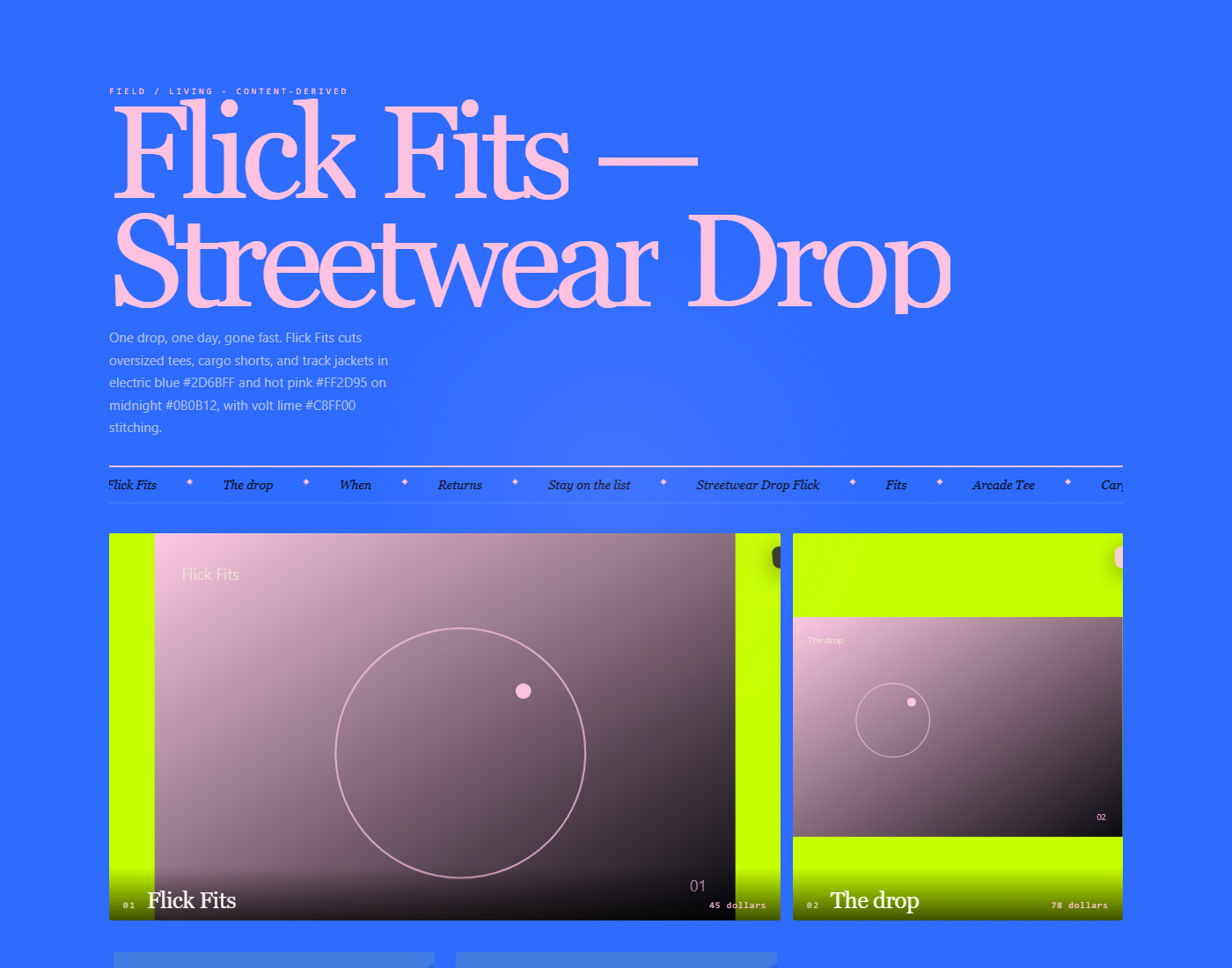 |
Photoshoots and collections | Editorial spread with numbered looks and hover develop |
particles |
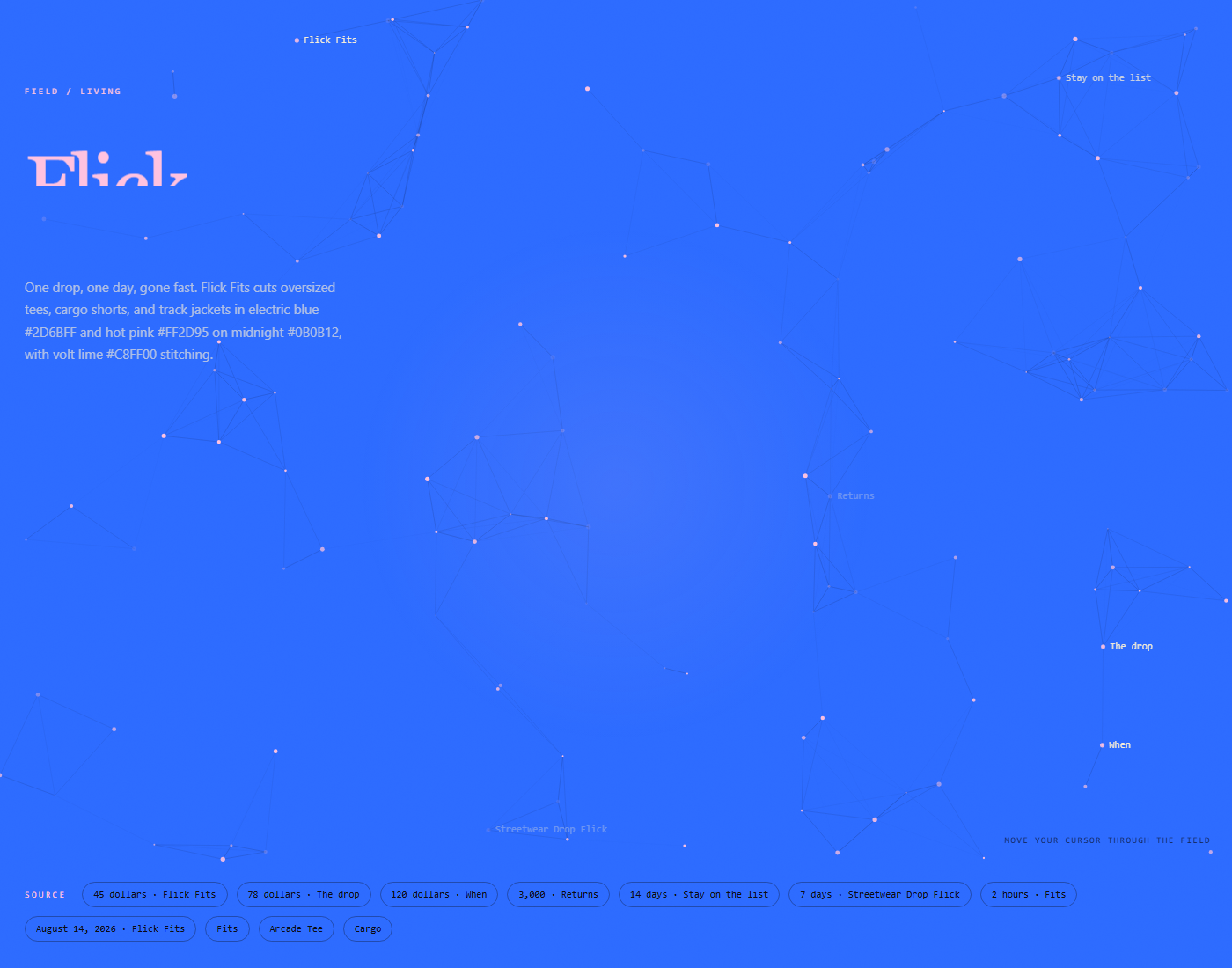 |
Living networks and signals | Interactive constellation of the source anchors |
List the registry from the CLI:
npx reimagine-it --listThe committed examples are reproducible references, not promises about an unknown input. Run the command on your own page to see what its content produces.
Generic design prompts begin with adjectives — modern, premium, minimal, bold. That is why unrelated pages often converge on the same cards, gradients, and invented SaaS copy.
Content-Derived Design begins with evidence:
source signals → design decisions → working artifact → human approval
A restaurant menu can become a warm typographic folio. An observability page can become a pulse-led console. A personal essay can become a quiet narrative field. The content gives the redesign a reason to look the way it does.
- Meaning stays anchored. Titles, headings, dates, numbers, links, emails, and source anchors are extracted and checked in generated output.
- The artifact is usable. Generated pages are standalone HTML with inline CSS/SVG/canvas where needed.
- The choice is inspectable. Auto ranks up to three directions and reports why it selected one.
- Variation is controlled. No seed explores;
--seed 42reproduces an approved direction. - The craft floor is explicit.
npx reimagine-it auditruns 19 rules in Node (no Python required). Pythonscripts/audit.pyis a parity-tested CI mirror. - Several directions on demand.
variationswrites ranked pages plus a contrast sheet from the same evidence. - Brand surface is reusable.
lockcaptures palette, type, and voice as JSON;--refapplies it — including reverse-lock from any HTML page.
Use Auto when you know the outcome you want but do not want to choose a token first:
npx reimagine-it --auto -i page.html -o reimagined/auto.htmlAuto reads the source, scores the directions that fit its evidence, generates candidates, rejects candidates that fail its craft checks, and writes the strongest result. It is deterministic when seeded and model-agnostic: a host agent may add judgment, but the artifact still comes from the source.
Every run now carries a design decision report: a typographic voice picked from the source's profile (editorial, grotesque, techno, serif-classic, high-contrast, expressive, mono-forward), a harmonious OKLCH palette (the source accent rotated into two role colors), the art primitives used, and a 136-point design-QA score (type scale, art direction, motion system, palette constraint, source fidelity, landmarks). Auto re-rolls weak first draws for its top directions before shipping, and --emit writes design-token.json + quality-report.json beside the artifact so the "why this design" answer is inspectable.
Use a specific direction when the medium is already clear:
npx reimagine-it -i page.html -t webpage -o reimagined/article.html
npx reimagine-it -i page.html -t dashboard -o reimagined/ops.html
npx reimagine-it -i page.html -t infographic -o reimagined/poster.html
Preview the extracted evidence before generating:
npx reimagine-it -i page.html --dry
npx reimagine-it -i page.html --json- Start with the real source. Do not flatten the page into a vague prompt.
- Generate two or three defensible directions. Change the composition and visual register, not just the hex values.
- Show the live artifact. Let the client inspect the page, not only a screenshot.
- Approve one direction. Keep its report beside the artifact.
- Pin the decision. Use a seed for a reproducible page; use the agent skill's lock workflow for a reusable design language.
- Run the quality gate. A page is not done if it clips content, loses focus visibility, or invents facts.
The intended outcome is fresh when requested, consistent when approved — not accidental repetition and not random chaos.
- Live playground — paste HTML, select a direction, preview the result, and share the input.
- Playground walkthrough (39s, silent) — the full paste → Auto → pick → download loop captured against the live page.
- 60-second captioned teaser — social cut of the same loop with step captions; embeddable, YouTube/X-ready.
- llms.txt for agents — the whole product in one machine-readable page: commands, rules, MCP config, links.
- Nine journeys — crypto battle royale, music festival, skate brand, juice bar, streetwear drop, living building, observability platform, neighborhood bakery, city budget report. Auto picked nine distinct tokens. Each bundle has source HTML, Auto output, two alternatives, a report, Auto desktop stills, and a before/after WebP.
- Case study index — commands, fidelity, and how to read a bundle.
- Horizon — SLO/uptime page → navy dashboard.
- Full suite — one building source → orbitable
3jsobject, editorial feature, and living SVG. - Infographic · Gaming
Two doors. The CLI writes the page. The skill tells an agent to run that CLI. Host plugin wrappers are the same skill.
Not Keith Mangold’s Reimagine It interview SaaS (Product Hunt slug reimagine-it). This repo is Kayforkind’s Content-Derived Design CLI — npm package reimagine-it, gallery kayforkind.github.io/reimagine-it.
npx reimagine-it --auto -i page.html -o redesign.htmlNo install required. Package: npmjs.com/package/reimagine-it · 2.15.0.
npx reimagine-it extract -i page.html -o signals.json
npx reimagine-it variations -i page.html -n 4 -o review/
npx reimagine-it lock -i brand.html -o house.lock.json
npx reimagine-it audit redesign.html
npx reimagine-it mcp
No-install demo: live playground.
npx skills add Kayforkind/reimagine-itThen /reimagine-it in Cursor, Codex, Claude Code, Copilot, Gemini CLI, Windsurf, or Factory Droid. The skill must call the CLI; it must not hand-author HTML.
The skills.sh listing counts those npx skills add installs. It is not GitHub stars. A low badge means few catalog installs, not a missing product. Directory submissions for cursor.directory / ClawHub have paste-ready copy in docs/LISTINGS.md.
Host plugin wrappers (same skill)
/plugin marketplace add Kayforkind/reimagine-it
/plugin install reimagine-it@reimagine-it
codex plugin marketplace add Kayforkind/reimagine-it
codex plugin add reimagine-it@reimagine-it
droid plugin marketplace add https://github.com/Kayforkind/reimagine-it
droid plugin install reimagine-it@reimagine-it --scope user
Design Health now lives in its own repository: Kayforkind/design-health-action — 
- uses: Kayforkind/design-health-action@v1
  with:
    path: "**/*.html"
    fail-on-warnings: "false"
Design Health reports CLEAN, WARNINGS, or FAIL and checks typography, palette, motion, content, structure, and performance heuristics. It needs no LLM or API key. Pin a release tag in production rather than depending on main.
The core path accepts a file or stdin:
# File in, file out
npx reimagine-it -i page.html -t webpage -o redesign.html

# HTML through a pipeline; stdout contains only the artifact
cat page.html | npx reimagine-it -t webpage -o - > redesign.html

# Inspect extraction
npx reimagine-it -i page.html --dry
npx reimagine-it -i page.html --json

# Before/after summary without writing a file
npx reimagine-it -i page.html --auto --diff

# Reproduce an approved draw
npx reimagine-it -i page.html -t webpage --seed 42 -o approved.html

# Agent/CI-safe writes: refuse an existing target; the source path is
# always refused as output
npx reimagine-it -i page.html --auto --no-clobber -o reimagined/auto.html

# Opt in to Google Fonts for the chosen voice (default output is fully offline)
npx reimagine-it -i page.html -t landing --web-fonts -o redesign.html

# Force a voice or a direction from a harness plan
npx reimagine-it -i page.html --voice expressive -o redesign.html
npx reimagine-it -i page.html --auto --plan '{"token":"landing","voice":"grotesque"}' -o redesign.html

# Also write the design decision report next to the output
npx reimagine-it -i page.html --auto -o reimagined/auto.html --emit

# Several directions + a contrast sheet
npx reimagine-it variations -i page.html -n 4 -o review/ --seed 42

# Capture a brand surface, then put new content on it
npx reimagine-it lock -i house-style.html -o house.lock.json
npx reimagine-it -i my-page.html --ref house.lock.json -t landing -o on-brand.html

# Reverse-lock: steal a surface from any HTML, keep this source's facts
npx reimagine-it -i my-page.html --ref competitor.html --auto -o study.html

# Design Health on a generated page (exit 3 if it fails its own floor)
npx reimagine-it -i page.html --auto --audit -o checked.html
npx reimagine-it audit redesign.html --verbose
Use -o - when another tool should receive only generated HTML; progress stays on stderr.
By default -o replaces an existing file — that is what makes the deterministic engine's byte-identical regeneration work. Two guards cover agent and CI loops: an output path that resolves to the source file is always refused (exit 2, no flag can lift it), and --no-clobber refuses (exit 2) to replace any existing output file. Writes are atomic (temp file + rename), so a reader never sees a partial artifact. Auto mode additionally serializes concurrent runs on one output path: a second --auto invocation fails fast with exit 2 (another auto run holds this output) instead of racing the first run to the final write. The lock is advisory — a crashed run's lock goes stale within 30 seconds and is stolen automatically, and --force overrides a live lock knowingly.
Expose the same engine to an MCP-compatible host:
{
  "mcpServers": {
    "reimagine-it": {
      "command": "npx",
      "args": ["-y", "--package", "reimagine-it", "reimagine-it-mcp"]
    }
  }
}
Per-host setup files (Claude Desktop, Cursor, VS Code, Claude Code, Windsurf, Gemini CLI) with troubleshooting: docs/mcp-hosts.md.
Tools:
reimagine— generate a selected direction from raw HTML (refbrand-locks the surface)design_auto— choose, generate, verify, and explain a directiondesign_variations— several ranked directions plus a contrast sheetdesign_lock— capture a page's surface as reusable JSONextract_content— inspect source evidencelist_tokens— discover directionsaudit_html— run Design Health (19 rules, native, no Python)list_rules— the Design Health rule registry
- The browser extension adds local redesign to Chrome, Edge, and Firefox. It does not upload the page or require a server.
- The optional DeepSeek Harness adapter exposes
design_autowhile leaving model access, approvals, sandboxing, and persistence to the host runtime.
Every direction is benchmarked against the same bar Auto itself applies — standalone HTML, source title and anchors retained, focus-visible, reduced-motion, ::selection, no placeholder copy, no external asset fetch. All 17 tokens × 4 representative sources score 100/100 usability and full fidelity, with 96.8% mean class-set difference between directions on the same source (no two tokens produce the same page; the most-similar pair, webpage+landing, rose from 76% to 91.7% after landing got its own hero form — orbit map, proof strip, credit wall — closing #38). Structural difference is the meaningful metric: two pages can share a file size while shipping different markup. For transparency, the size-distance figure is 18.6% and tracked alongside it in benchmark/BENCHMARK.md — file size was never a proof of sameness or difference.
| Direction | Fidelity (title kept) | Usability (quality /100) | Content art |
|---|---|---|---|
cinematic |
18/18 | 100/100 | 16.0 |
artistic |
18/18 | 100/100 | 11.0 |
glass |
18/18 | 100/100 | 10.0 |
gradient |
18/18 | 100/100 | 10.0 |
showcase |
18/18 | 100/100 | 10.0 |
lookbook |
18/18 | 100/100 | 10.0 |
simulation |
18/18 | 100/100 | 9.0 |
dashboard |
18/18 | 100/100 | 8.8 |
infographic |
18/18 | 100/100 | 8.0 |
photography |
18/18 | 100/100 | 8.0 |
3js |
18/18 | 100/100 | 7.0 |
landing |
18/18 | 100/100 | 6.0 |
svg |
18/18 | 100/100 | 6.0 |
webpage |
18/18 | 100/100 | 5.0 |
motion |
18/18 | 100/100 | 5.0 |
editorial |
18/18 | 100/100 | 4.0 |
particles |
18/18 | 100/100 | 2.0 |
Content art counts inline glyph tiles, donut charts, ranked bars, prisms, orbit maps, and proof strips — 3js, particles, and editorial score lower there by design (WebGL scene / canvas field / text-forward layout). Regenerate the full table anytime: node scripts/benchmark-tokens.js. The --gate flag makes it exit non-zero if any token drops below 100/100, and CI enforces it weekly (and on engine changes).
Run the project checks locally:
npm test
npm run check:docs
Current repository checks include:
- 68 engine unit tests covering extraction, generation, Auto, CLI behavior, color science, and npm pack contents.
- 20 MCP tool tests (no SDK required) plus 28 end-to-end CLI tests for generate, audit, lock, and variations.
- JS/Python Design Health parity across a 155-file HTML corpus (19 rules; a drift fails CI).
- 32 curated gold HTML files audited; warnings are advisory and failures block shipping.
- Intentional failing-fixture coverage to ensure the audit exit code catches real craft-floor failures.
- Browser bundle freshness checks for the landing page and extension.
- Token audits in CI: every generated direction is structurally checked and headless-rendered for visible text, overflow, and headings.
npm packmust includemcp/tools.jsand the engine modules — the published CLI and MCP bin share one package.
The audit is deterministic and heuristic. It is not a claim of full WCAG conformance, visual taste, or universal browser compatibility. Review the generated page before shipping it to a client.
reimagine-it is built to be proven, not promised — by CI, on every change:
- Protected main. Every PR — including the owner's Dependabot PRs — passes a required CI Gate (full suite + the 17-token 100/100 benchmark) plus review-gold, with an owner review required on protected paths (
CODEOWNERS). Stale reviews are dismissed on new commits; force-pushes are rejected. - Proof regenerates or CI fails. Every committed example artifact must regenerate byte-identically from the committed engine (
scripts/check-repro.js); every screenshot must exist at canonical dimensions and stay in sync withdocs/(scripts/check-stills.js);npm packmust match the intentional file list exactly (scripts/check-tarball.js). - Honesty is property-tested. The extractor's "no invented facts" contract runs as fuzz/property tests — a seeded generational fuzzer plus fast-check shrinking properties — against hostile and malformed input; the fidelity floor (every source fact rendered) runs as a weekly 250-seed stress harness across every token × source cell.
- Supply-chain hardening. All GitHub Actions are pinned to immutable commit SHAs and bumped by Dependabot; workflows default to
contents: read; CI installs with--ignore-scripts; pip installs in CI are pinned to complete PyPI hash sets; release artifacts are signed with cosign keyless (Fulcio/Rekor) alongside SLSA provenance; secret scanning and push protection are on. - CI itself is guarded. A structural workflow lint (
scripts/check-workflows.py) runs in the gate: every step must haverun:/uses:, every action SHA-pinned, every CI pip install hash-pinned — the shape GitHub rejects at parse time can never merge again. CodeQL and Semgrep SAST scan every push; the audit linter itself is fuzzed weekly. - The page only claims what's true. A site-claims guard (
scripts/check-site-claims.js) in the gate checks the docs-site hero counts, token marquee, gallery, and stage buttons against the real token roster and examples tree on every PR. Every badge's mechanism is documented in docs/BADGES.md; release-verification commands are below; the bot-token design is documented in docs/RELEASES-TOKEN.md. - Offline by construction. Output is one standalone HTML file with no CDN, no API keys, no telemetry; the audit enforces the no-external-fetch rule on every generated page (19 deterministic rules, no LLM).
- Deterministic. Same input + seed → byte-identical output. Clients can re-derive any published artifact themselves.
Security findings: see SECURITY.md — private vulnerability reporting is enabled.
Every release asset is signed keyless by the GitHub Actions release workflow. To verify the npm tarball signature (works offline of GitHub — needs only cosign and the two release files):
# from https://github.com/Kayforkind/reimagine-it/releases/latest
curl -sLO https://github.com/Kayforkind/reimagine-it/releases/latest/download/reimagine-it-2.15.0.tgz
curl -sLO https://github.com/Kayforkind/reimagine-it/releases/latest/download/reimagine-it-2.15.0.tgz.sig

cosign verify-blob \
  --bundle reimagine-it-2.15.0.tgz.sig \
  --certificate-identity-regexp "https://github.com/Kayforkind/reimagine-it/" \
  --certificate-oidc-issuer "https://token.actions.githubusercontent.com" \
  reimagine-it-2.15.0.tgz
# → Verified OK  (signed by this repo's release workflow via Fulcio/Rekor)
The npm package carries the same guarantee as an SLSA provenance attestation: npm view reimagine-it dist.attestations, and npm audit signatures verifies the registry-side signature chain. Same input + seed → byte-identical output means you can also regenerate any published artifact from source and diff it yourself.
The best contribution is a real source with a defensible transformation:
- add source HTML and a generated artifact;
- explain why the palette, motif, type, and motion come from the source;
- provide a regenerating command or script;
- run
npm testand inspect the result in a browser.
See CONTRIBUTING.md, ROADMAP.md, and CHANGELOG.md.
MIT — see LICENSE.